
Easy Overnight Danish Rye Bread (Rugbrød)
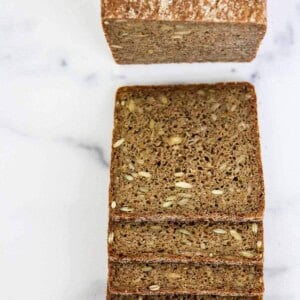
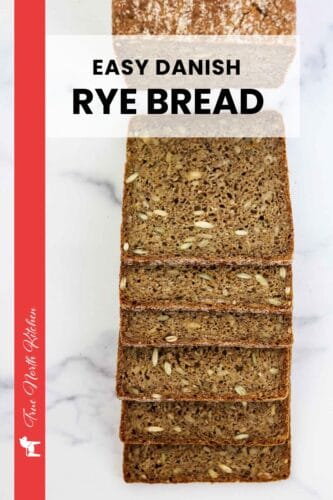
Danish Rye Bread (Rugbrød) is dense, hearty, and packed with rye flour, whole grains, and a variety of nutritious seeds. A true staple of Nordic cuisine, this richly flavored, slightly tangy bread is the foundation of smørrebrød (Danish open-faced sandwiches) and a key part of the Scandinavian diet.
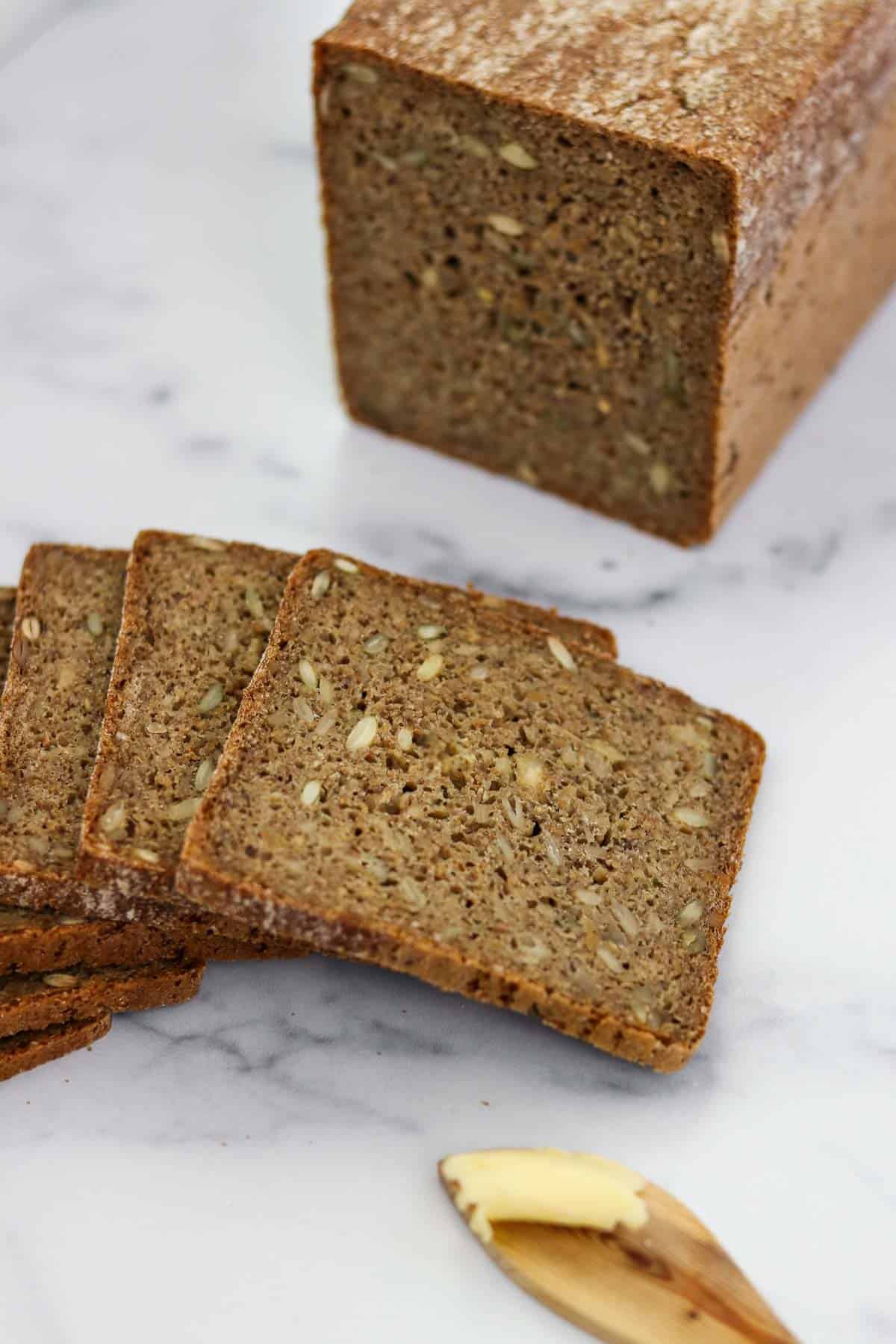
If you've ever tried to find authentic rugbrød in the U.S., you know it can be a challenge. Most store-bought rye bread here is closer to deli rye or pumpernickel, lacking the depth and texture of traditional Danish rye. But the good news? You can make it at home-easily!
If you keep a sourdough starter around, you might also want to consider trying my recipe for Sourdough Danish Rye Bread (Rugbrød) which is also really delicious!
Jump to:
Ingredients
For the Soaker:
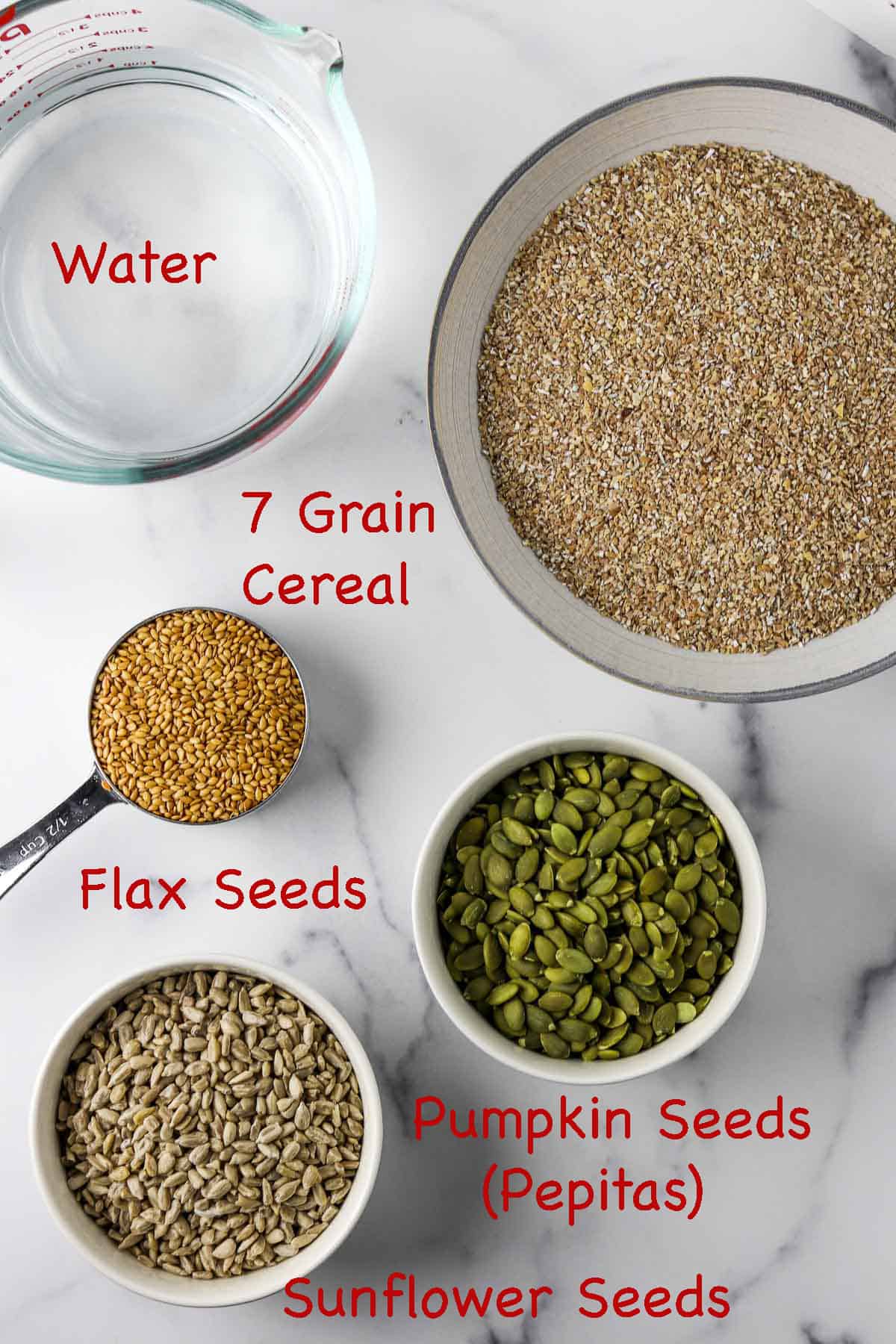
- 7 grain cereal - provides the hearty backdrop of the bread. Traditional rugbrød recipes call for rye chops which are just coarsely chopped pieces of rye grains. Because rye chops can be hard to find in the U.S., this recipe calls for a 7 grain cereal mix instead (feel free to use rye chops if you have access to them! They work just as well here). 7 grain cereal mix is simply a combination of several different coarsely chopped grains including wheat, rye, triticale, oats, oat bran, barley and/or brown rice. I often use the Bob's Red Mill brand, but have also had good luck with this mix from Nuts.com.
- Sunflower, pumpkin and flax seeds - bring texture, flavor and nutrients to this hearty, substantial loaf.
For the Dough:
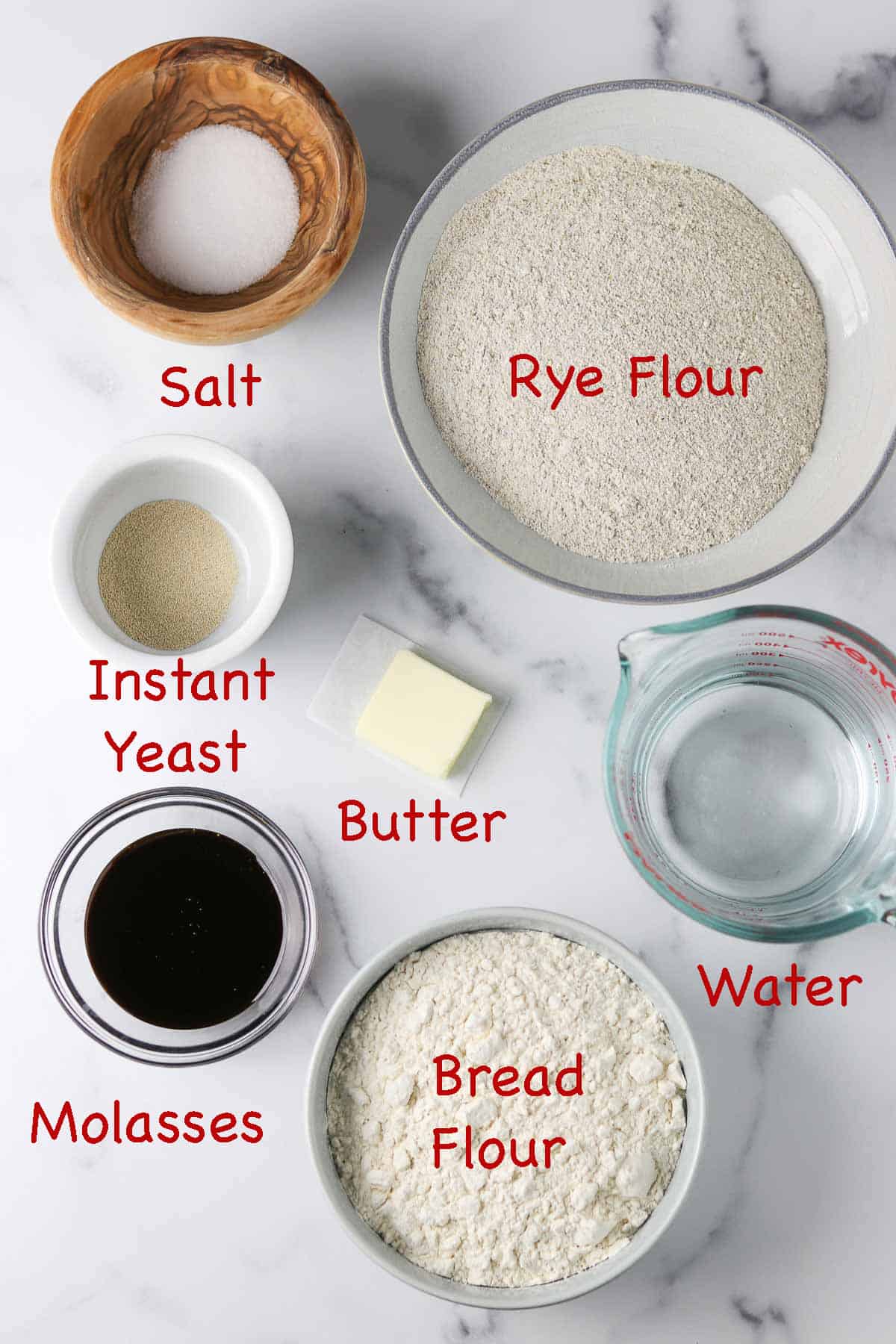
- A combination of bread flour and rye flour - is key to providing the gluten structure this bread needs to keep its shape.
- Instant yeast - serves as the leavener. Please note that instant or rapid rise yeast and active dry yeast are two different things. The essential difference between the two is that instant yeast can be mixed right in with the dry ingredients whereas active dry yeast is designed to be proofed in warm liquid prior to adding it to the recipe. Instant yeast is also more reliable, effective and fast-acting.
- Molasses - not only sweetens and flavors the dough, it also helps deepen the dark brown color of the final loaf.
- Water
- Salt
- Butter - for greasing the pan.
The Equipment
- a sturdy stand mixer
- a 13 x 4 inch pullman pan with lid
How To Make Danish Rye Bread (Rugbrød)
The Night Before:
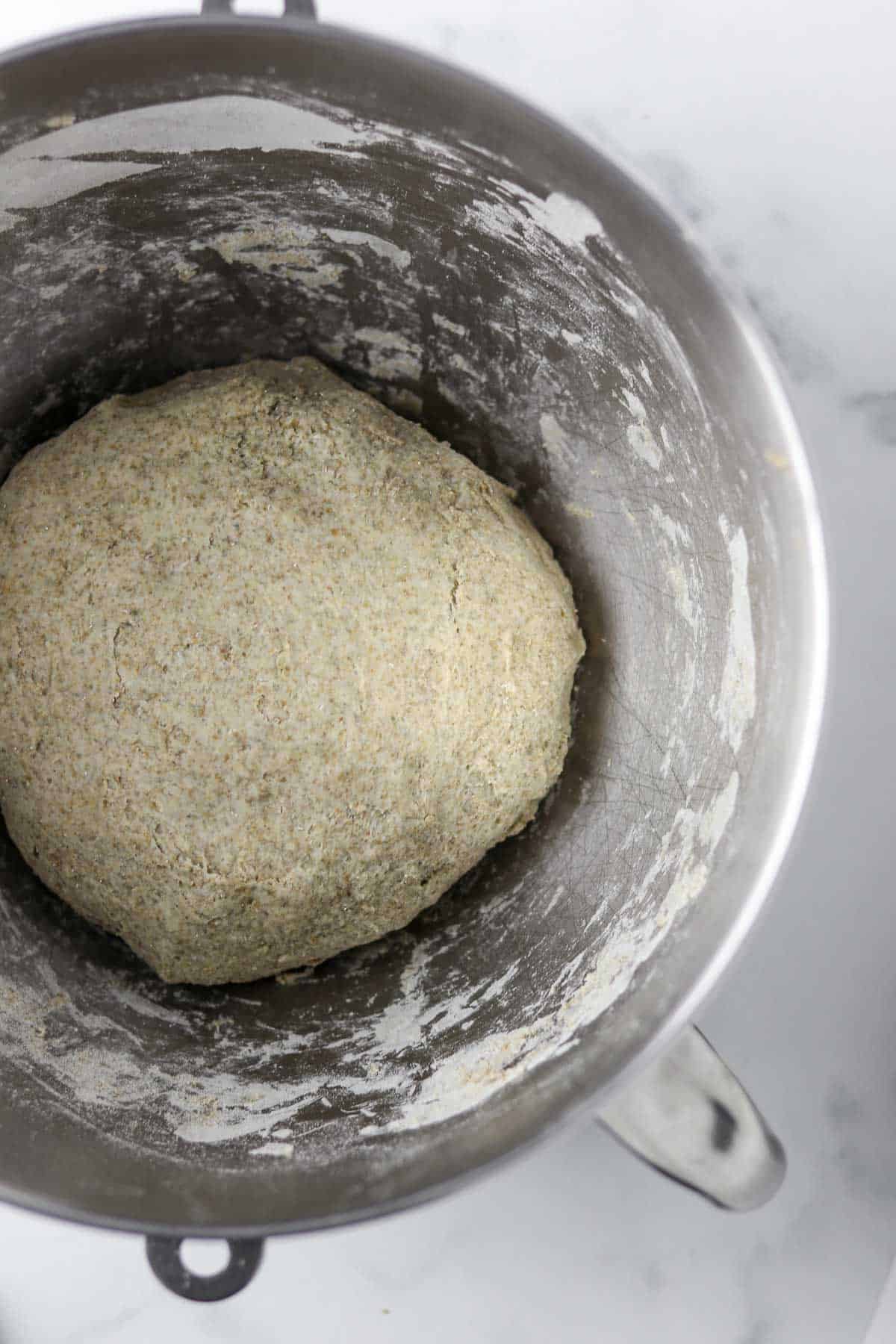
- 8-12 hours before you plan to make the bread, combine the rye flour, bread flour, instant yeast and cold water together in a large bowl (I just use the bowl that goes with my stand mixer since that is where it will eventually go....one less bowl to wash). Hold back on the molasses and salt for now. Stir to combine as best you can (mixture will be thick), and then knead briefly with your hands until you have a cohesive mixture. The dough will be very thick and clay-like in texture. Cover with plastic wrap and set aside at room temperature.
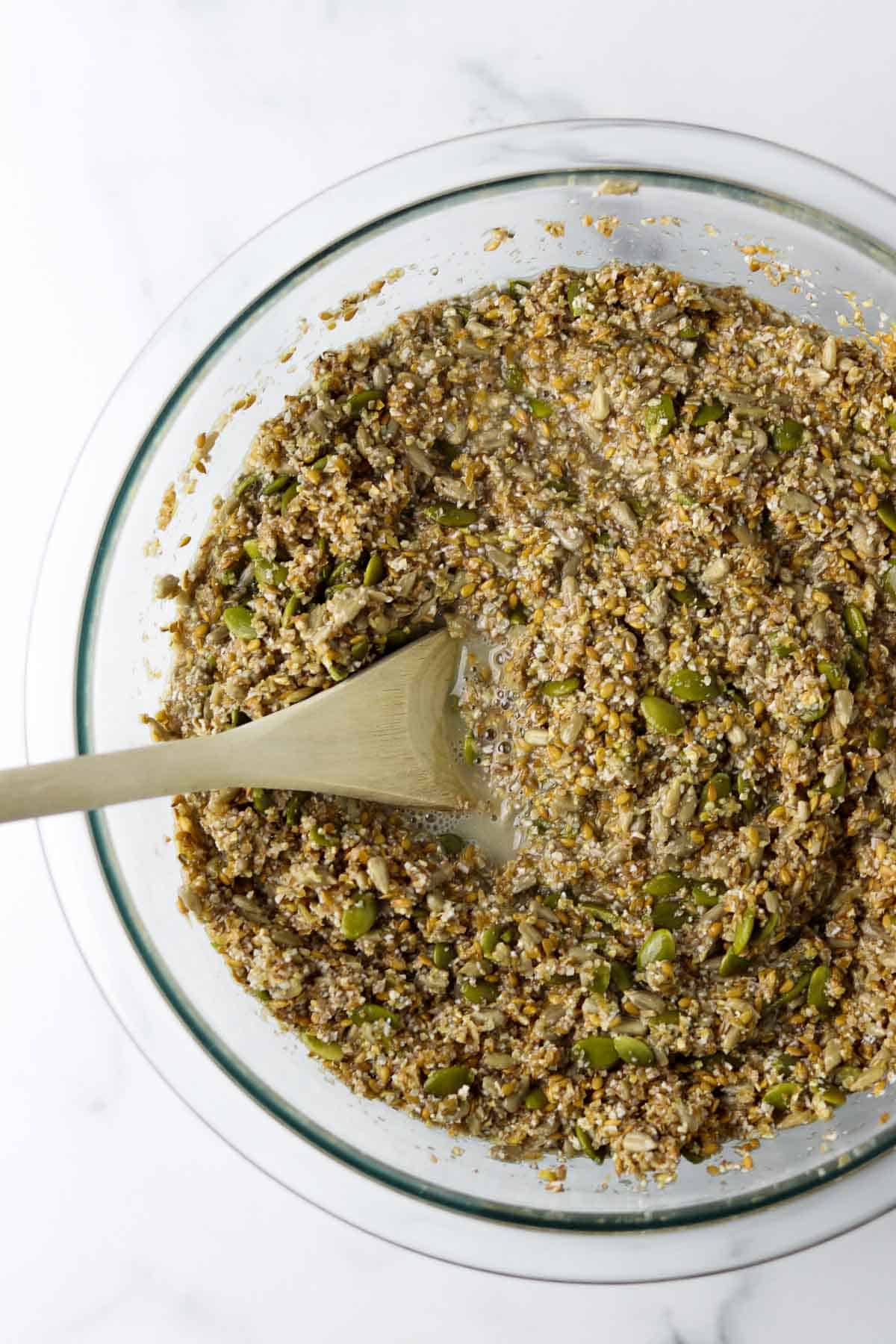
- At the same time, mix the soaker together: Combine all the ingredients for the soaker together in a medium bowl. Cover with plastic wrap and set aside at room temperature.
The Morning of Baking:

- 8-12 hours later, finish mixing the dough: Grease a 13 x 4 inch pullman loaf pan with butter and dust with rye flour, including the lid. Set aside. Combine the dough, molasses, salt and the soaker (do not drain the soaker. Go ahead and put in the water and the soaked seeds) in the work bowl of a stand mixer. Using the paddle attachment, mix on low for 2-3 minutes, scraping down the sides occasionally. Increase the speed to medium and continue to mix for another 2-3 minutes. The dough will be very sticky at this point.
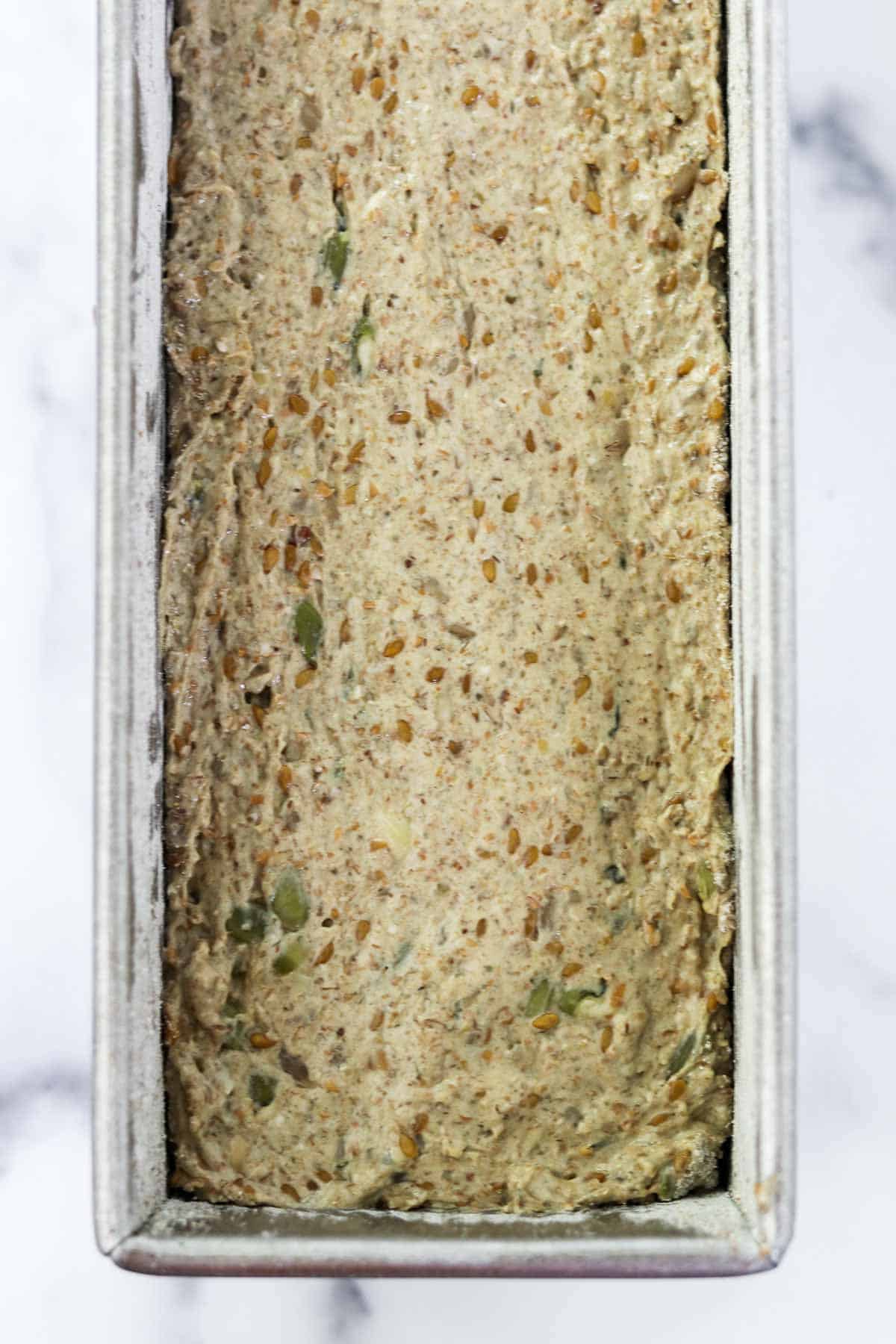
- Scrape or spoon the dough into the prepared pan and smooth out the top. Damp fingers or a moistened spatula can help with this if you are having a hard time getting the top smooth.
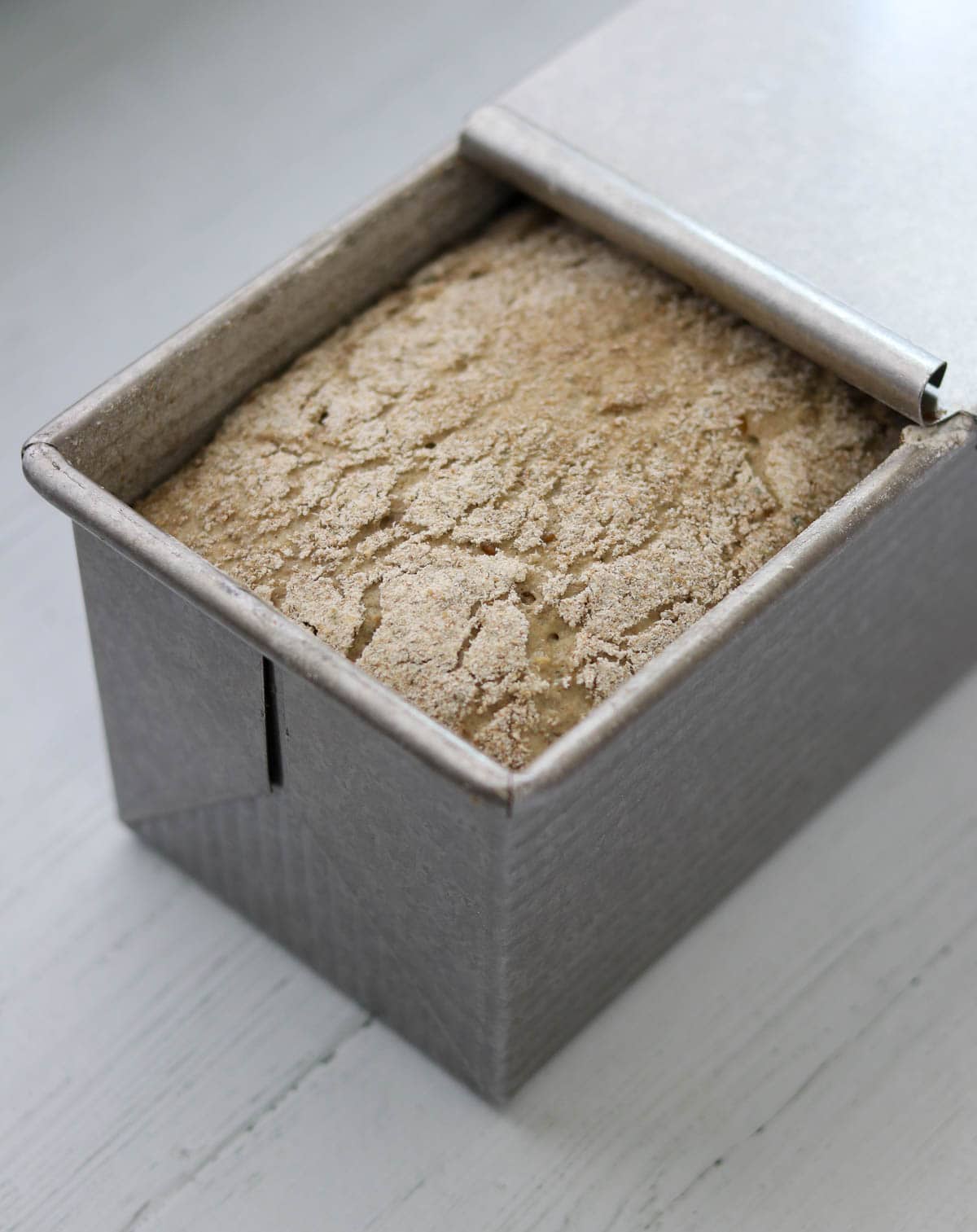
- Dust the top of the loaf with a thin, even layer of rye flour and place the pullman lid cover on top of the pan. Let the dough rise for 1½ -3 hours at room temperature or until it is about ½ inch from the top of the pan. The time that it takes for your dough to rise will largely depend on the temperature of the dough and your kitchen.
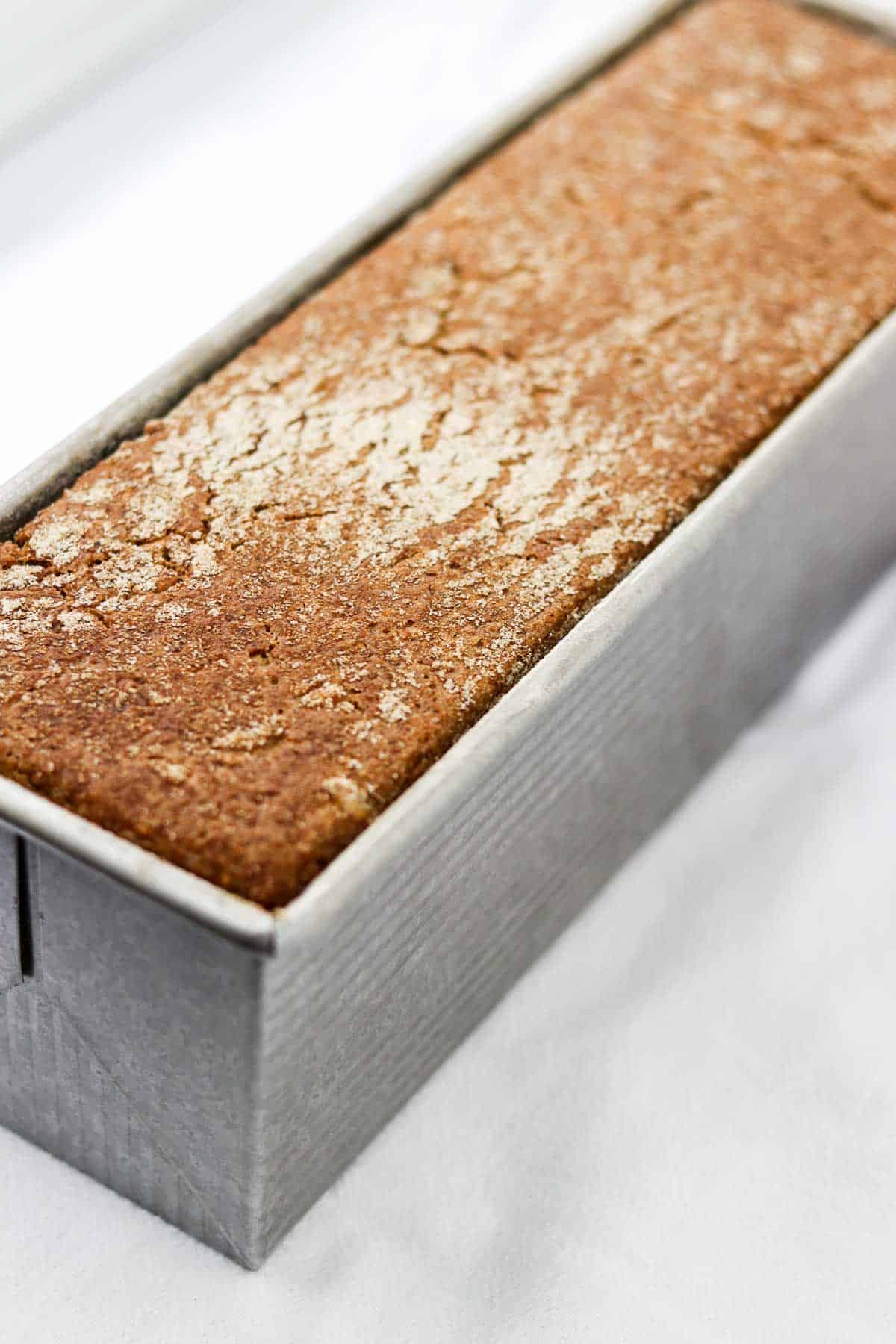
- Meanwhile, preheat the oven to 500 degrees. Bake the loaf with the lid on for 15 minutes. Reduce the temperature to 400 degrees and continue to bake, covered, for an additional 15 minutes. Remove the pan from oven and carefully slide the lid off. Reduce the temperature to 325 degrees and bake, uncovered, for an additional 45 minutes.
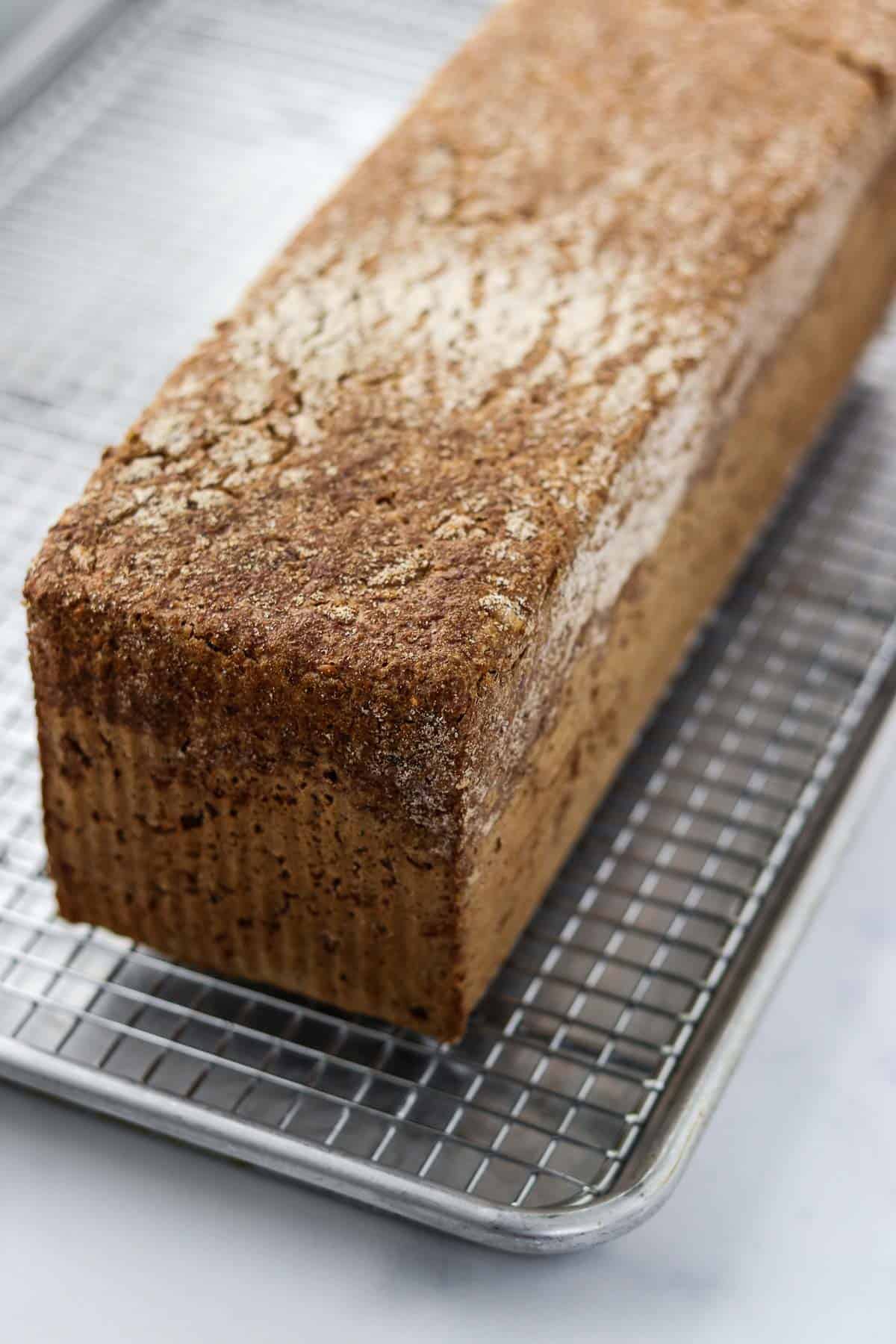
- Remove from the oven and immediately turn the loaf out onto a metal cooling rack set inside a rimmed baking sheet. Return the bread to the oven for an additional 10 minutes. Remove from the oven and allow the bread to cool completely before slicing, at least 3 hours or overnight if you can wait! Rye bread is even better a day after baking.
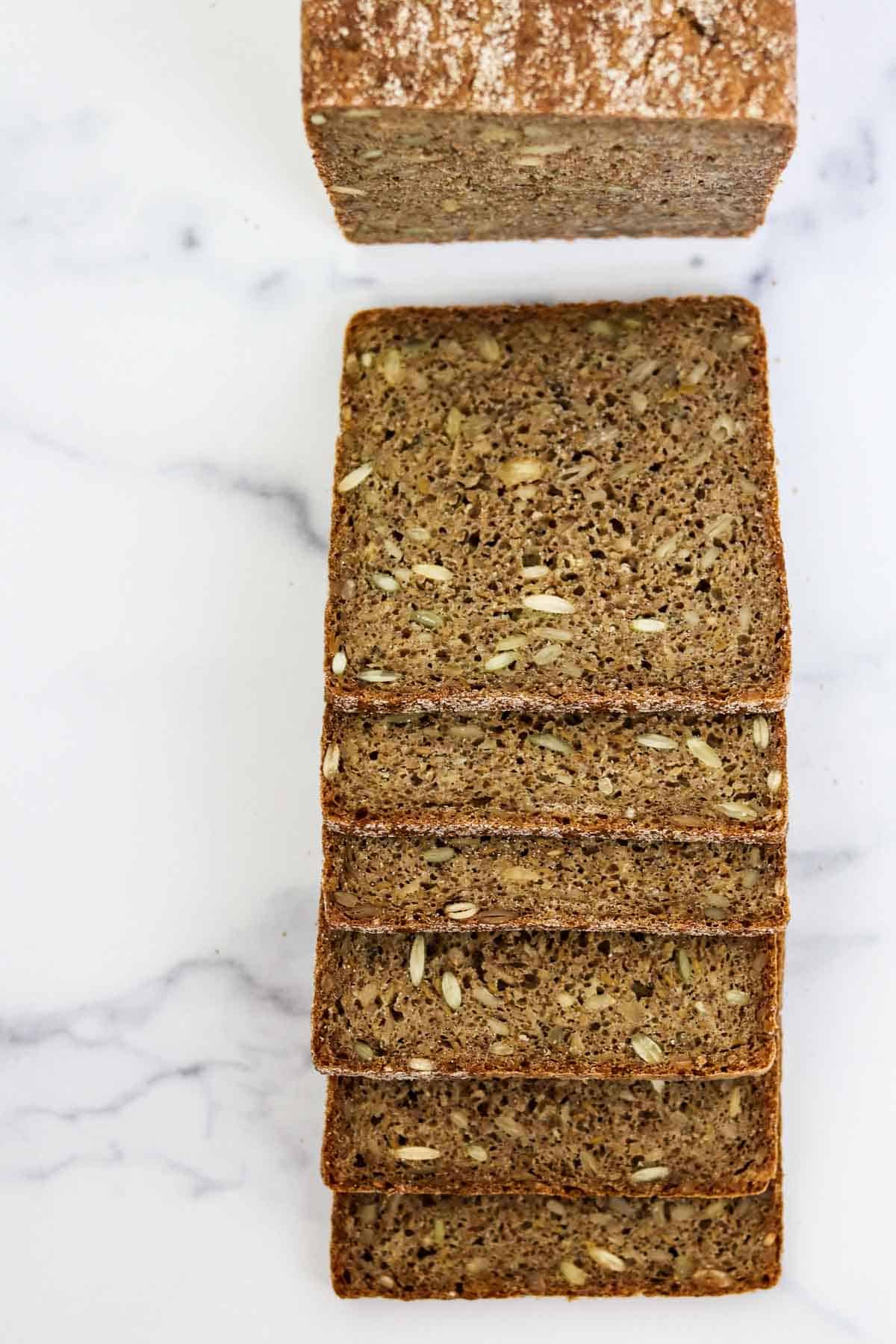
- Remove from the oven and allow the bread to cool completely before slicing, at least 3 hours or overnight if you can wait! Rye bread is even better a day after baking.
Expert Tip
- Wait a day before enjoying your bread! Unlike wheat breads which are best eaten shortly after cooling, both the texture and flavor of rye bread improves after a rest of 12-24 hours. Once the bread has cooled completely, wrap it loosely in foil and cut into it the following day.
Recipe FAQs
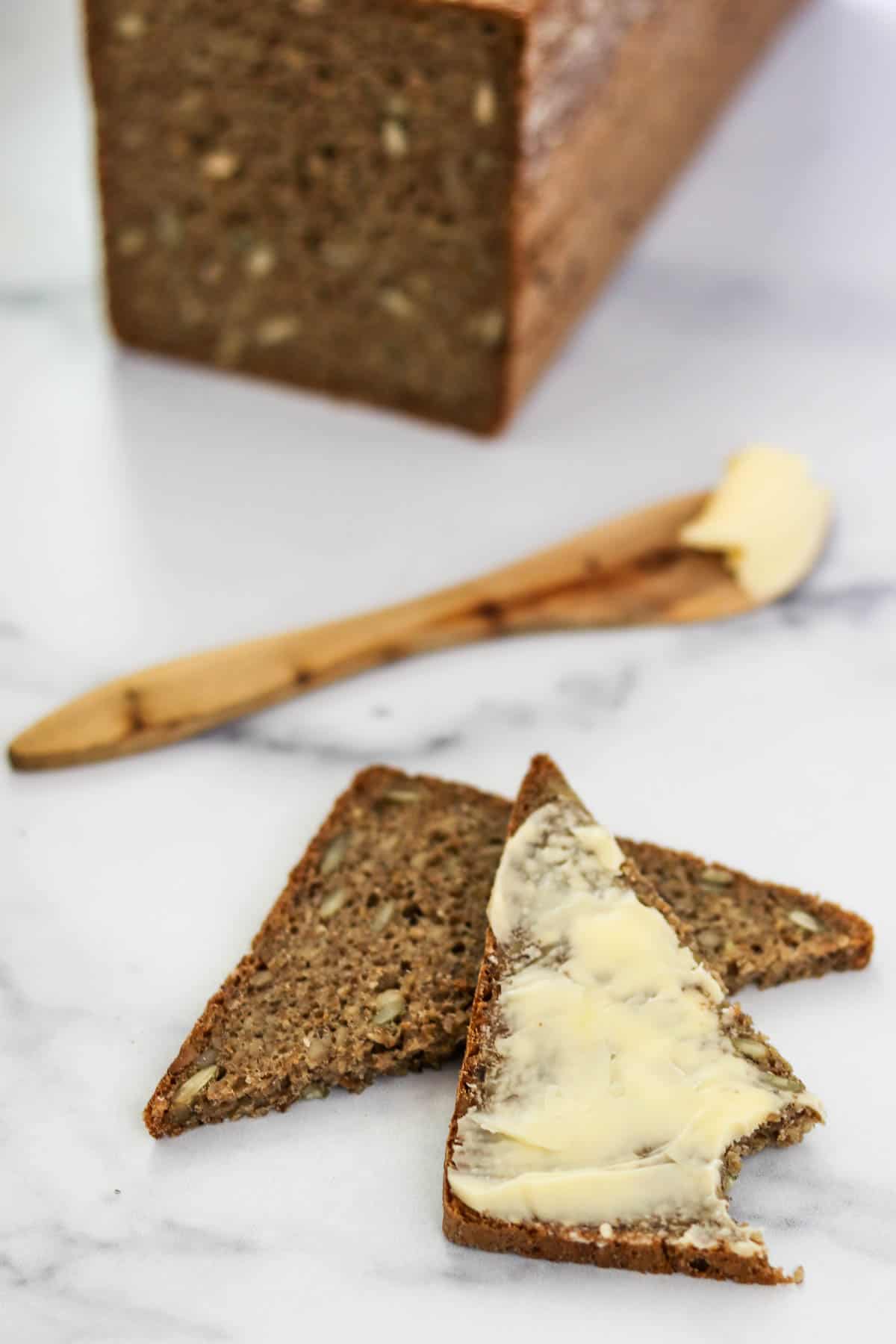
Rugbrød simply means "rye bread" in Danish. It is a sturdy, dense loaf that is comprised of rye flour, chopped rye grains and is often studded with sunflower, pumpkin and/or flax seeds. It is often baked in a 13 x 4 inch pullman pan with a lid. This helps the rye bread bake properly and gives it its characteristic square shape.
It can be stored loosely wrapped in foil at room temperature for about 5 days.
Yes! Rugbrød freezes very well. Tightly wrap the bread (either a whole or partial loaf or slices) in plastic wrap and then either tightly wrap it in foil or place it inside of a freezer bag. It will keep for a couple of months.
I have had many readers tell me they have split the dough into two 9 x 5 loaf pans instead of using the pullman pan with excellent results. Use a heavy baking sheet as a "lid" for the covered portion of the baking and keep the baking times and temperatures the same.
If you have a smaller mixer, it may be difficult to get all of the dough in the bowl at one time. If that is the case, simply mix half of the overnight dough, molasses, salt and the soaker and then mix the second half. Combine all of the dough together in the loaf pan for baking.
Rye breads, particularly those baked here in America, often have a variety of ingredients added to them to enhance their color (making them darker in appearance) and flavor. Common additions include caramel coloring (no thank you), stout beer, cocoa powder, espresso powder and molasses. Rugbrød, in contrast, has very little additional flavoring, perhaps just a little molasses for sweetening. It is meant to be a very straightforward bread so that it can serve as a neutral base for a variety of different sandwich toppings.
Sometimes I will come across a rugbrød recipe that calls for flavor enhancers such as caraway, fennel or anise seed in the dough, but this seems to be more of an exception than the rule.
How and What to serve with Rugbrød
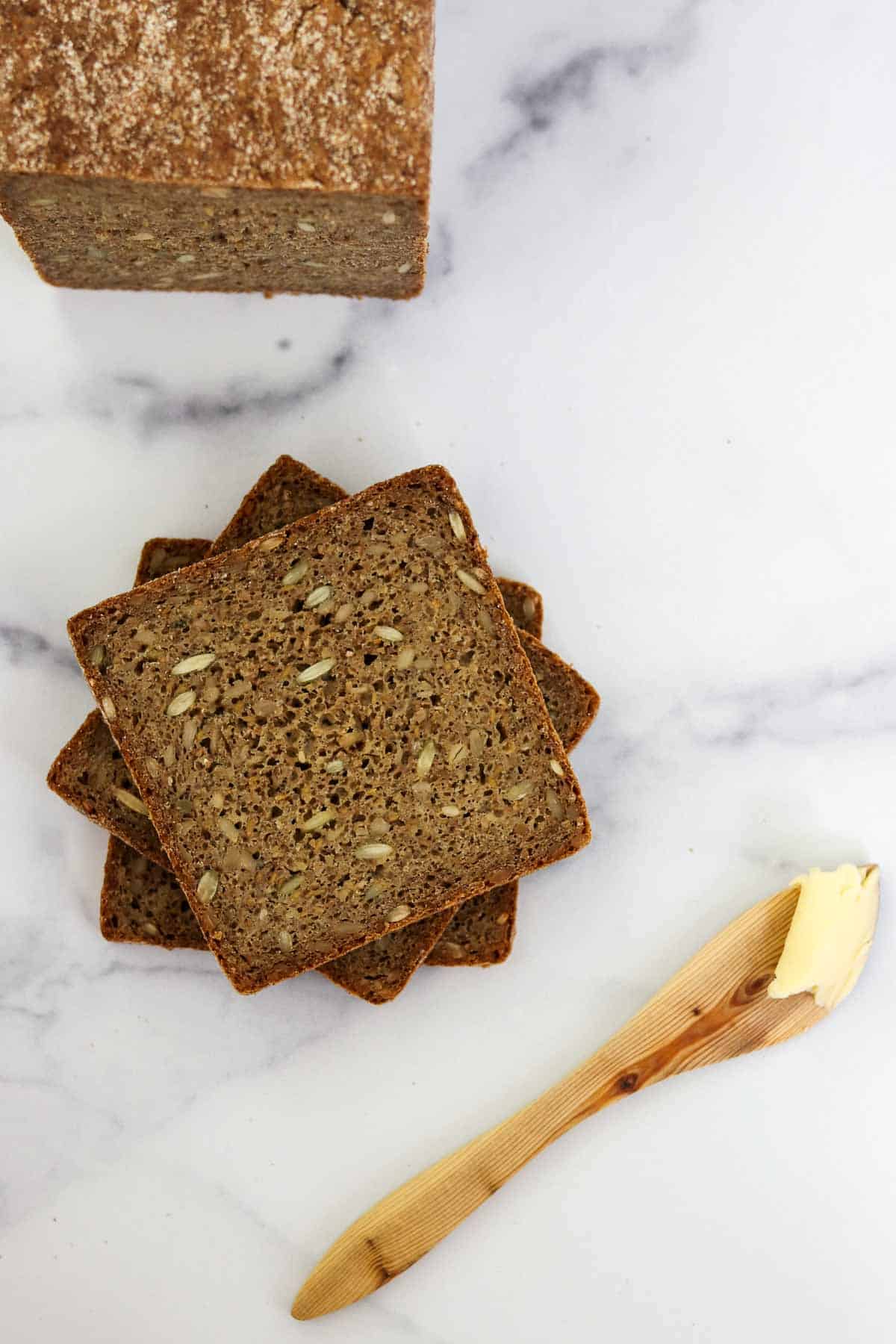
When it is served, Rugbrød is typically sliced thin (a little less than a quarter of an inch) and buttered liberally with salted butter. There is actually a word in Danish, tandsmør, which means "tooth butter". It refers to buttering your bread generously enough so that when you bite into it you can see your teeth marks in it.
It may be enjoyed as is, simply slathered with butter, or it can be piled with additional ingredients to form the base of smørrebrød , the famous Danish open-faced sandwiches. Check out this post about How to Make Smørrebrød at Home for everything you need to know about making these deliciously beautiful open-faced sandwiches with your rugbrød!
Related Recipes
Looking for more Scandinavian rye bread recipes? Give these a try:
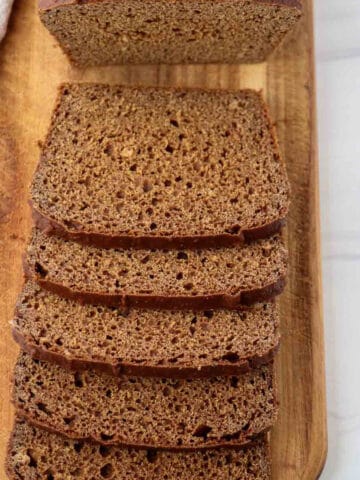

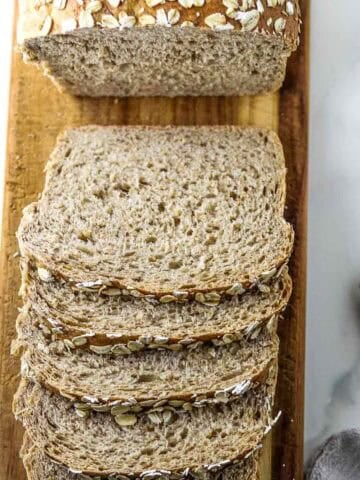
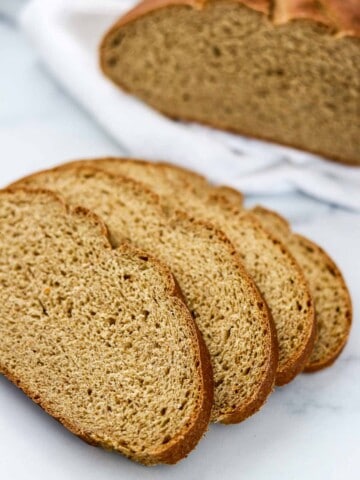
If you tried this Danish Rye Bread (Rugbrød) recipe or any other recipe on my website, please leave a 🌟 star rating and let me know how it goes in the comments below. I love hearing from you!
Recipe
Easy Overnight Danish Rye Bread (Rugbrød)
Ingredients
For the Soaker:
- 2 ½ cups 7 grain hot cereal mix such as Bob's Red Mill brand or rye chops see note below
- 1 cup raw sunflower seeds
- 1 cup raw pumpkin seeds (pepitas)
- ½ cup flax seeds
- 2 ⅔ cups cold water
For the Dough:
- 2 cups dark rye flour I use the Bob's Red Mill brand, plus more for dusting the pan and loaf
- 2 cups bread flour
- 1 teaspoon instant dried yeast
- 1 ½ cups cold water
- 4 teaspoons salt
- ¼ cup molasses
- Butter for greasing the pan
Special Equipment Needed:
- Stand mixer
- Pullman pan with lid (13 x 4 inches in size)
Instructions
- For the Soaker: Combine all the ingredients for the soaker in a medium bowl. Cover with plastic wrap and let sit at room temperature overnight, approximately 8-12 hours.
- For the Dough: Combine both flours, yeast and water in a separate bowl. Stir to combine as best you can (mixture will be thick), and then knead briefly with your hands until you have a cohesive mixture. Dough will be very thick and clay-like in texture. Cover with plastic wrap and let sit at room temperature overnight, about 8-12 hours.
- Grease a 13 x 4 inch pullman pan with lid with butter and dust with rye flour, including the lid. Set aside. Combine the soaker, flour mixture, salt and molasses in the bowl of a stand mixer. Fit mixer with paddle attachment and mix on low speed for 2-3 minutes until everything is thoroughly combined, scraping down the sides of the bowl from time to time. Increase speed to medium and mix for an additional 2-3 minutes, stopping to occasionally scrape down the sides of the bowl. Mixture will be quite sticky.
- Transfer the dough to the prepared pan. Smooth out the top and sift a thin layer of rye flour over the surface of the dough. Place lid on pan and let the dough rise for 1½ -3 hours at room temperature or until it is about ½ inch from the top of the pan. The time that it takes for your dough to rise will largely depend on the temperature of the dough and your kitchen.
- Meanwhile, preheat the oven to 500 degrees. Bake the loaf with the lid on for 15 minutes. Reduce the temperature to 400 degrees and continue to bake, covered, for an additional 15 minutes. Remove the pan from oven and carefully slide the lid off. Reduce the temperature to 325 degrees and bake, uncovered, for an additional 45 minutes. (The loaf should have an internal temperature of 205-210 degrees F on an instant read thermometer at this point). Remove from the oven and immediately turn the loaf out onto a metal cooling rack set inside a rimmed baking sheet. Return the bread to the oven for an additional 10 minutes. Remove from the oven and allow the bread to cool completely before slicing, at least 3 hours. Rye bread is even better a day after baking. If you can wait until the following day, let the completely cooled bread sit at room temperature loosely wrapped in foil overnight before slicing. The bread will keep at room temperature for 3-5 days loosely wrapped in foil. Freeze for longer storage.
I made this just over a week ago and I love it. It turned out perfectly and I agree that it is wonderful how moist it is. I’ve just mixed up the two bowlfuls again for the second go tomorrow morning. A friend is making her first one right now.
Lovely recipe and not difficult actually.
Oh my GOSH! I have been baking bread for nearly 50 years, made all sorts of artisan breads, but never made bread with a "soaker." I made two changes from your recipe: I used rye sourdough starter (instructions here: https://practicalselfreliance.com/rye-sourdough-starter/) instead of packaged yeast, and I used honey instead of molasses (we keep bees). Aside from the dough being from a little more wet than optimum, no doubt because of the changes I made, it is one of the most amazing bread recipes I have ever made! The flavor is outstanding! The texture quite lovely and unusual for a rye bread. I had no trouble at all getting an excellent rise with sourdough starter, so it was not dense and heavy. Perfect for sandwich bread or on its own. Top rating! Thank you so much for posting this recipe!
Hi Holly,
Thanks so much for your kind review! I'm so glad you enjoyed the bread and that you were able to use a rye sourdough starter in place of the yeast. Happy baking to you!
Kristi
Delicious! Halved the recipe and made it in a larger “normal” bread pan covered with a cookie sheet (but nothing to weigh it down). Top was a little crusty when it came out of the oven (I think from not using the Pullman pan) so I let it cool about 30 minutes and then wrapped tightly in foil. The top softened nicely from the steam by the next morning. Dense but not heavy and very “nutty”. Perfect with gjeost for breakfast! Lots of hands off time, but really a pretty easy to make bread.
Hi Vicki,
Thanks so much for your feedback! I'm glad you enjoyed the bread.
Happy Baking!
Kristi
I can't thank you enough for this recipe. It turned out perfectly, tasting (and looking) very professional! It's true the recipe lacks the sour tang my Dad is used to but he loved it and my Mom and I actually prefer it your way! I'll be making some more as soon as we finish the current loaf. Mange tak!
Hi Jen,
Thanks so much for your comment! I'm so glad you and your family enjoyed the bread. If you are feeling ambitious and want to try a version of this bread that is a little more sour, give my Sourdough Danish Rye Bread recipe a try. It's a little more of what your Dad is looking for, I suspect. But I agree with you....I like the fact that this one isn't as sour as a traditional rugbrød. Thanks again for taking the time to leave me a note! Have a great week.
Kristi
I tried to pin this recipe, after saving it, and I got a dead bird image after I made the attempt. I actually used the PIN symbol on the photo image itself. This is a real drag. I don't know if the recipe was saved. That's beyond my ability to determine at this point.
I like the recipe. Having cooked Scandahovian foods for over 50 years, I've got a sense of recipes. I'm a happy camper with yours. Thank you.
Hi Greg,
Thanks for letting me know! I'll check with the company that puts out the "Pin It" plugin I use and see what's up. Glad you enjoyed the bread despite the pinning difficulties!
Kristi
I am a recent, pandemic recruit to bread baking. Getting a good danish rye loaf has been a challenge - until I tried your recipe! My sourdough loaf turned out beautifully and tastes great. Thank you for the great and easy to follow recipe!
Dave
Hi Dave,
I'm so glad you enjoyed the bread! It's one of my all time favorite recipes. Happy baking!
Kristi
Hi Kristi,
When you say pumpkin seeds, do you mean the green pepitas?
Hi Pat,
Yes, green pepitas. I hope you enjoy the bread!
Kristi
Love your web site! Do you happen to have the weight equivalents for your easy Danish rye bread? Thanks!
John
Hi John,
Thanks for your nice note! I do not have the weight equivalents but have had a few requests so I probably should look into doing that the next time I make it myself. Happy Baking!
Kristi
Hi Morten,
Thanks so much for your comment! I'm so glad you enjoyed the bread. I love how you share it with your dogs! I will have to try that with mine. Thanks again for taking the time to share your feedback.
Kristi
Hi Kristi.
I finally managed to make, what I consider to be the perfect rye bread (RUGBRØD) following your recipe. Changing temperatures and giving the bake the extra 10 minutes out of the baking pans seems to do the trick. As it is nearly impossible to find sunflower seeds other than roasted seeds here in MN, I cut down on the amount of those seeds, and substituted with pearled barley seeds. The result is a slightly moist bread, easy to slice thin for "smørrebrød" (our daily lunch) and with a very good and well rounded taste. Furthermore, we give a slice to our old dog mixed in with canned dog food, to keep her stomach in order. She loves that bread, even though she is a stubborn and picky eater (my dogs in Denmark always were fed rugbrød with liverpaste). It seems to be good for their coats. I bake the breads without having pullman pans, by just placing another pan as cover while baking. It works well. So your recipe is absolute right on. Thanks.
Thank you very much for this. I'm happy I can make this myself from ingredients I can get here in Massachusetts. I've tried it all - rugbrød mixes and various recepies... Yours is the best. Easy to follow and works every time.
Thank you again!
Thank you so much for your comment, Alex! I'm so glad you enjoy the bread. Happy baking to you!
Kristi
Hi Christine,
Thanks for your note! I'm glad you enjoyed the video. Let me know how the bread turns out!
Kristi
Excellent I’ve been looking for this recipe in English. Great video! I don’t have a Pullman loaf pan yet but I’m going to get one.
Has anyone had the chance to scale this recipe in grams? I am making it tomorrow. I have followed a different recipe for a very similar bread but it has no regular flour. I am a looking forward to trying this as I think the addition of the bread flour will add some loft due to the gluten structure. I am awaiting my Pullman loaf via Amazon and I am also wondering if anyone has had to “stall” this recipe time line at any point prior to getting it in the pan? Can if ferment/sit longer than the 12 hours if necessary? Can it be mixed together and sit in the bowl until it is put in the pan? I am also using a combination of millet and oat groats for the grain mix. I’ll post my results! So excited
HI Jane,
I have not scaled this in grams, but I will look into it and add them to the recipe as I'm sure my European and Canadian readers would appreciate grams as well. Also, if you have a sourdough starter, I do have a sourdough version on the blog which is written in grams. You can find that recipe here: https://true-north-kitchen.com/sourdough-danish-rye-bread-rugbrod/
I have let the dough and the soaker rise in the fridge for up to 24 hours and the bread turned out fine. I would say if you haven't yet received your pan and you are getting close to 12 hours at room temp, pop everything in the fridge until it arrives and go from there.
I hope this helps! Please let me know how it goes!
Have made your recipe several times. It is appreciated by many. Very much. I would also appreciate if you would post the recipe scaled to grams. Always feel I can be more accurate with my measuring if I weigh. Thanks in advance.
Hi Karen,
I'm so glad you are enjoying the bread! And I will definitely be adding grams to the recipe as I have had the request several times now.
Thanks for your feedback!
Kristi
So if I let it sit for 12 hours at room temp and end up having to put it in the fridge, do I pick up with the next step when I take it out, or do I need to do anything differently?
Are you talking about after the initial overnight rise?
Yes, if I let it rise for 12 hours and then am unable to bake it and put it in the fridge. When I pull it back out, do I just mix together right away and let it rise in the pan? Thank you!
I think that will be fine! The second rise might take a little longer because of the cooler temps but otherwise I don't see why this wouldn't work.
Hi Cath,
Thanks for your comment! I'm so glad you enjoyed the bread. I am just now in the process of adding nutrition information to the recipes so I appreciate you letting me know that. Sometimes the automatic calculation isn't always correct for some reason. Please let me know what else you try!
Kristi