
Easy Overnight Danish Rye Bread (Rugbrød)
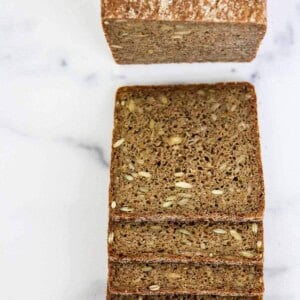
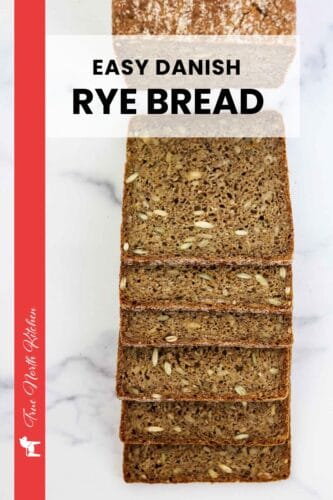
Danish Rye Bread (Rugbrød) is dense, hearty, and packed with rye flour, whole grains, and a variety of nutritious seeds. A true staple of Nordic cuisine, this richly flavored, slightly tangy bread is the foundation of smørrebrød (Danish open-faced sandwiches) and a key part of the Scandinavian diet.
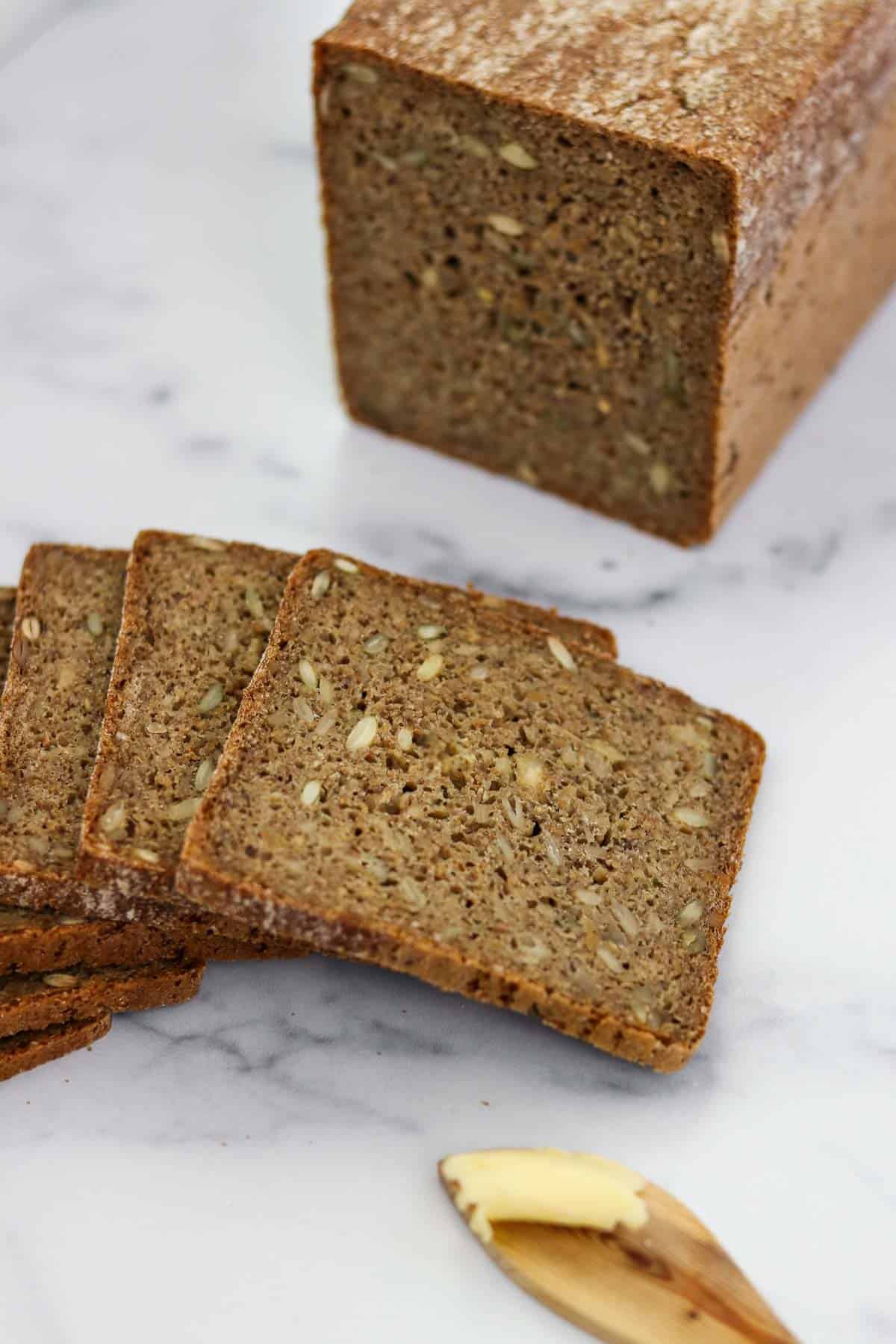
If you've ever tried to find authentic rugbrød in the U.S., you know it can be a challenge. Most store-bought rye bread here is closer to deli rye or pumpernickel, lacking the depth and texture of traditional Danish rye. But the good news? You can make it at home-easily!
If you keep a sourdough starter around, you might also want to consider trying my recipe for Sourdough Danish Rye Bread (Rugbrød) which is also really delicious!
Jump to:
Ingredients
For the Soaker:
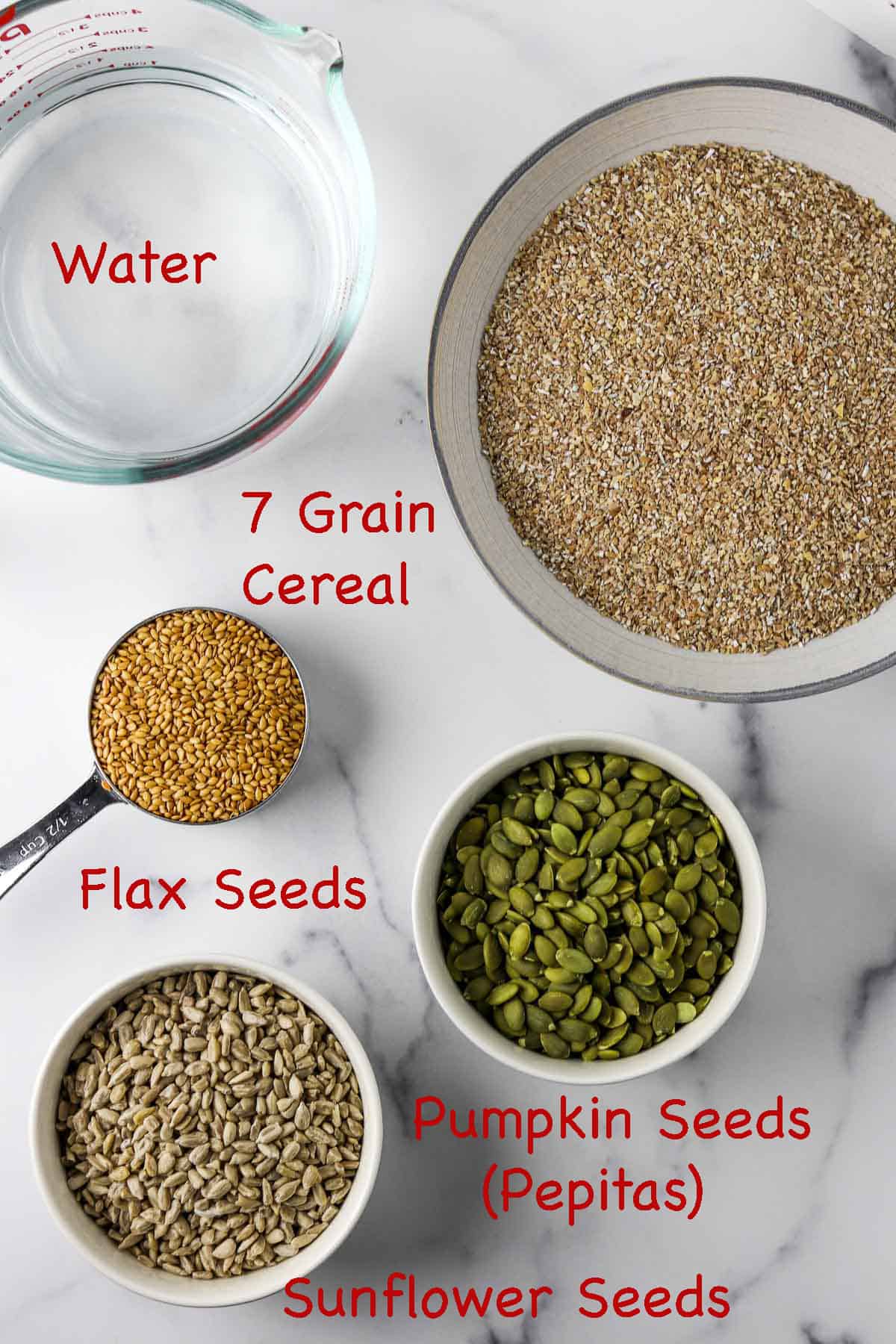
- 7 grain cereal - provides the hearty backdrop of the bread. Traditional rugbrød recipes call for rye chops which are just coarsely chopped pieces of rye grains. Because rye chops can be hard to find in the U.S., this recipe calls for a 7 grain cereal mix instead (feel free to use rye chops if you have access to them! They work just as well here). 7 grain cereal mix is simply a combination of several different coarsely chopped grains including wheat, rye, triticale, oats, oat bran, barley and/or brown rice. I often use the Bob's Red Mill brand, but have also had good luck with this mix from Nuts.com.
- Sunflower, pumpkin and flax seeds - bring texture, flavor and nutrients to this hearty, substantial loaf.
For the Dough:
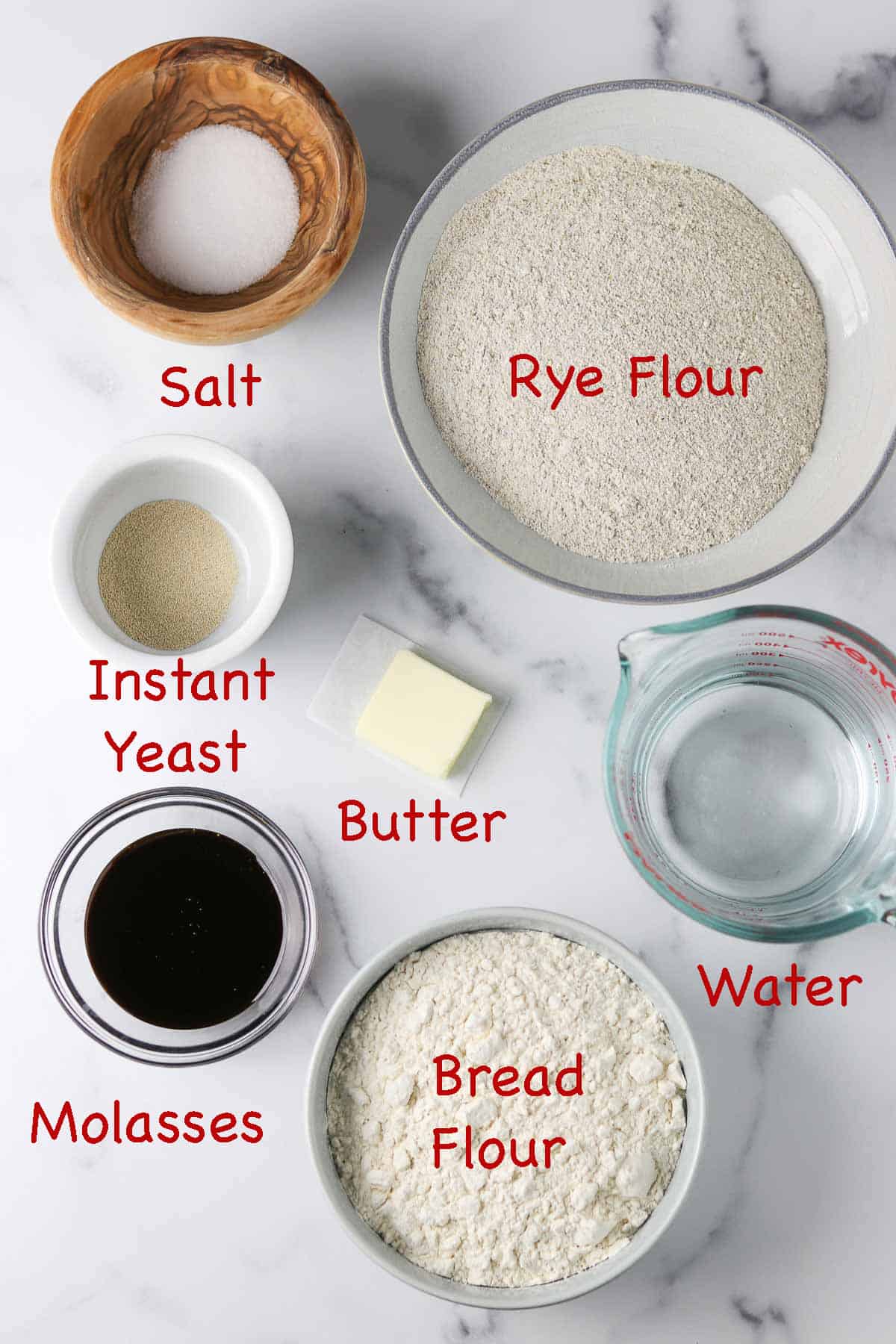
- A combination of bread flour and rye flour - is key to providing the gluten structure this bread needs to keep its shape.
- Instant yeast - serves as the leavener. Please note that instant or rapid rise yeast and active dry yeast are two different things. The essential difference between the two is that instant yeast can be mixed right in with the dry ingredients whereas active dry yeast is designed to be proofed in warm liquid prior to adding it to the recipe. Instant yeast is also more reliable, effective and fast-acting.
- Molasses - not only sweetens and flavors the dough, it also helps deepen the dark brown color of the final loaf.
- Water
- Salt
- Butter - for greasing the pan.
The Equipment
- a sturdy stand mixer
- a 13 x 4 inch pullman pan with lid
How To Make Danish Rye Bread (Rugbrød)
The Night Before:
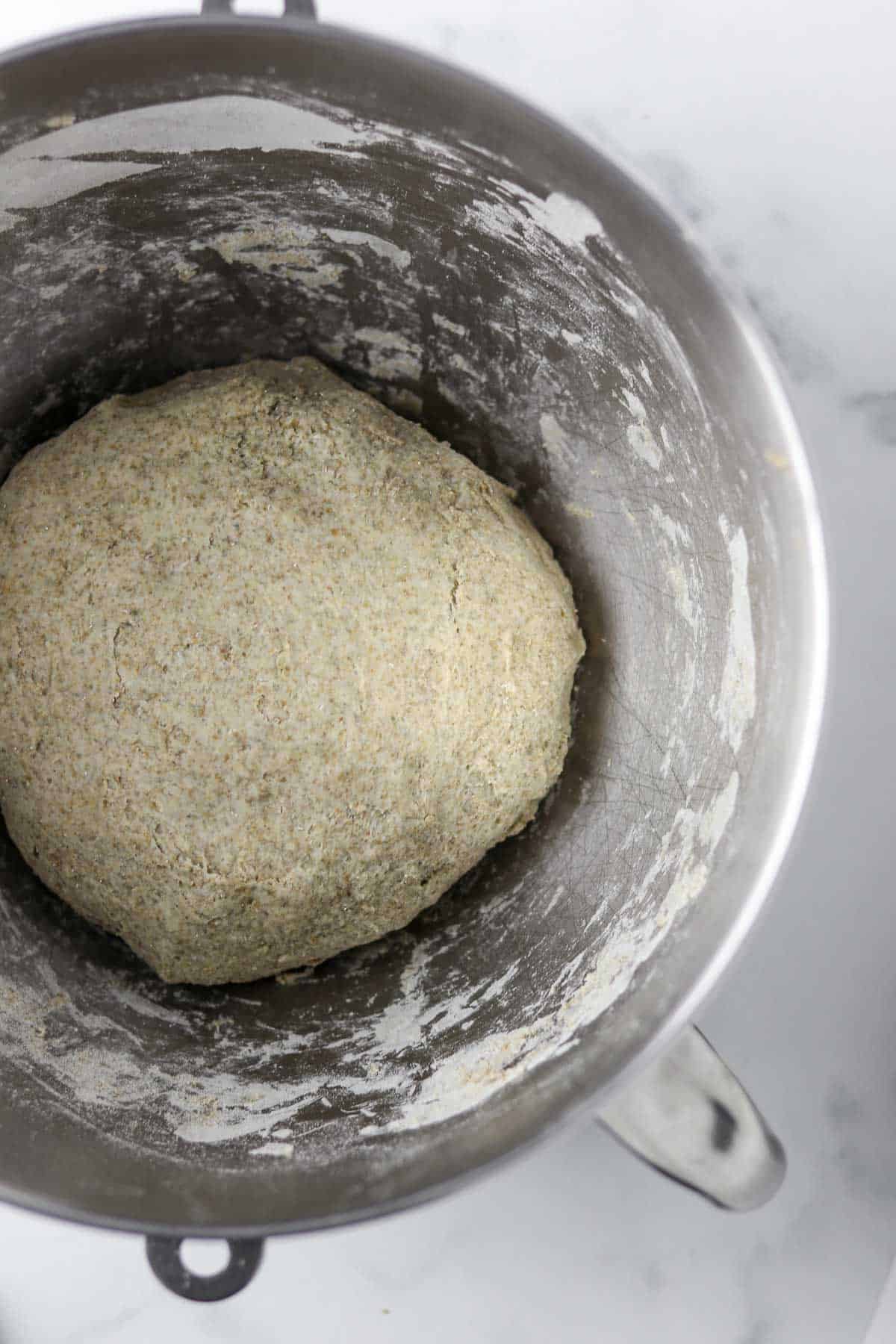
- 8-12 hours before you plan to make the bread, combine the rye flour, bread flour, instant yeast and cold water together in a large bowl (I just use the bowl that goes with my stand mixer since that is where it will eventually go....one less bowl to wash). Hold back on the molasses and salt for now. Stir to combine as best you can (mixture will be thick), and then knead briefly with your hands until you have a cohesive mixture. The dough will be very thick and clay-like in texture. Cover with plastic wrap and set aside at room temperature.
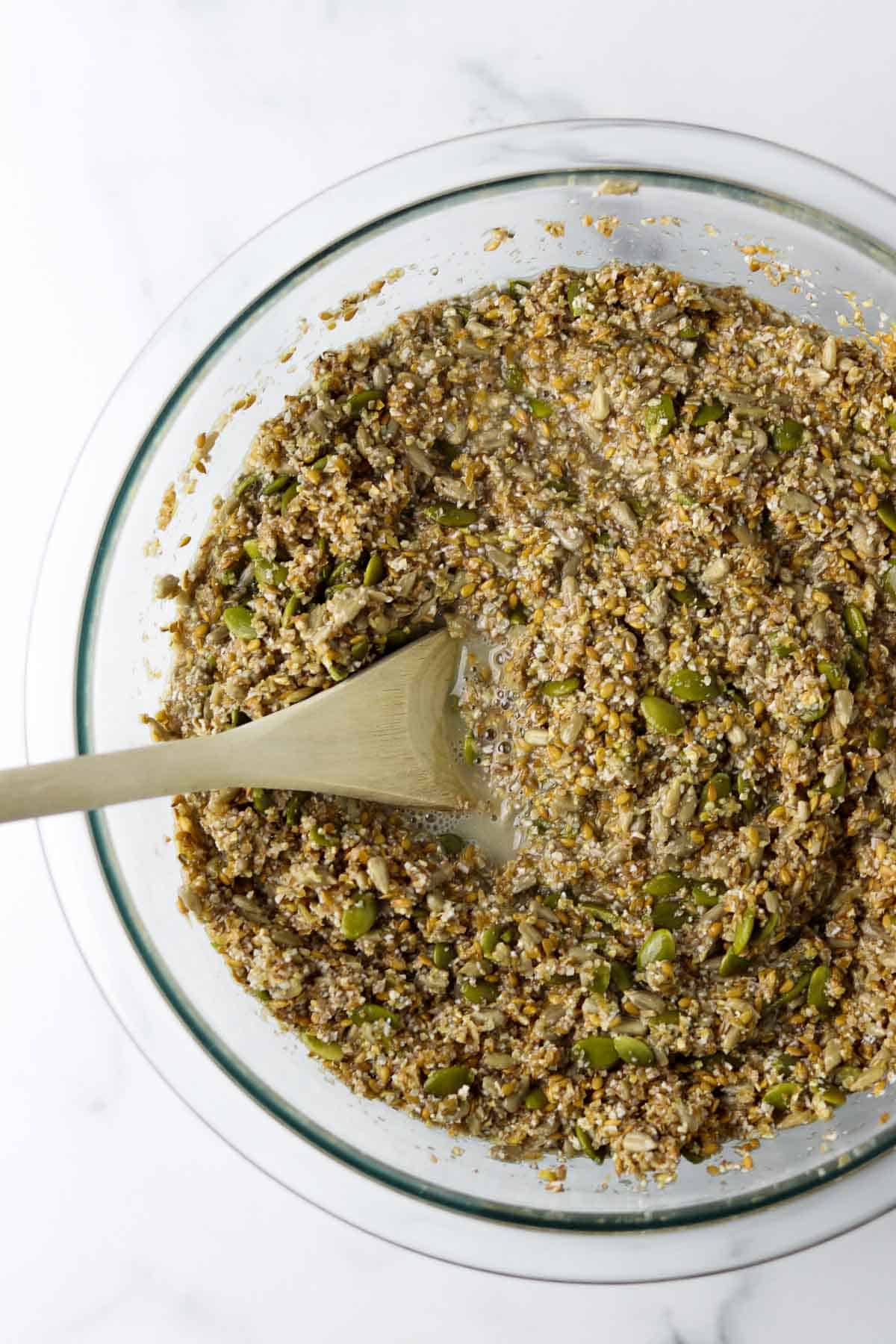
- At the same time, mix the soaker together: Combine all the ingredients for the soaker together in a medium bowl. Cover with plastic wrap and set aside at room temperature.
The Morning of Baking:

- 8-12 hours later, finish mixing the dough: Grease a 13 x 4 inch pullman loaf pan with butter and dust with rye flour, including the lid. Set aside. Combine the dough, molasses, salt and the soaker (do not drain the soaker. Go ahead and put in the water and the soaked seeds) in the work bowl of a stand mixer. Using the paddle attachment, mix on low for 2-3 minutes, scraping down the sides occasionally. Increase the speed to medium and continue to mix for another 2-3 minutes. The dough will be very sticky at this point.
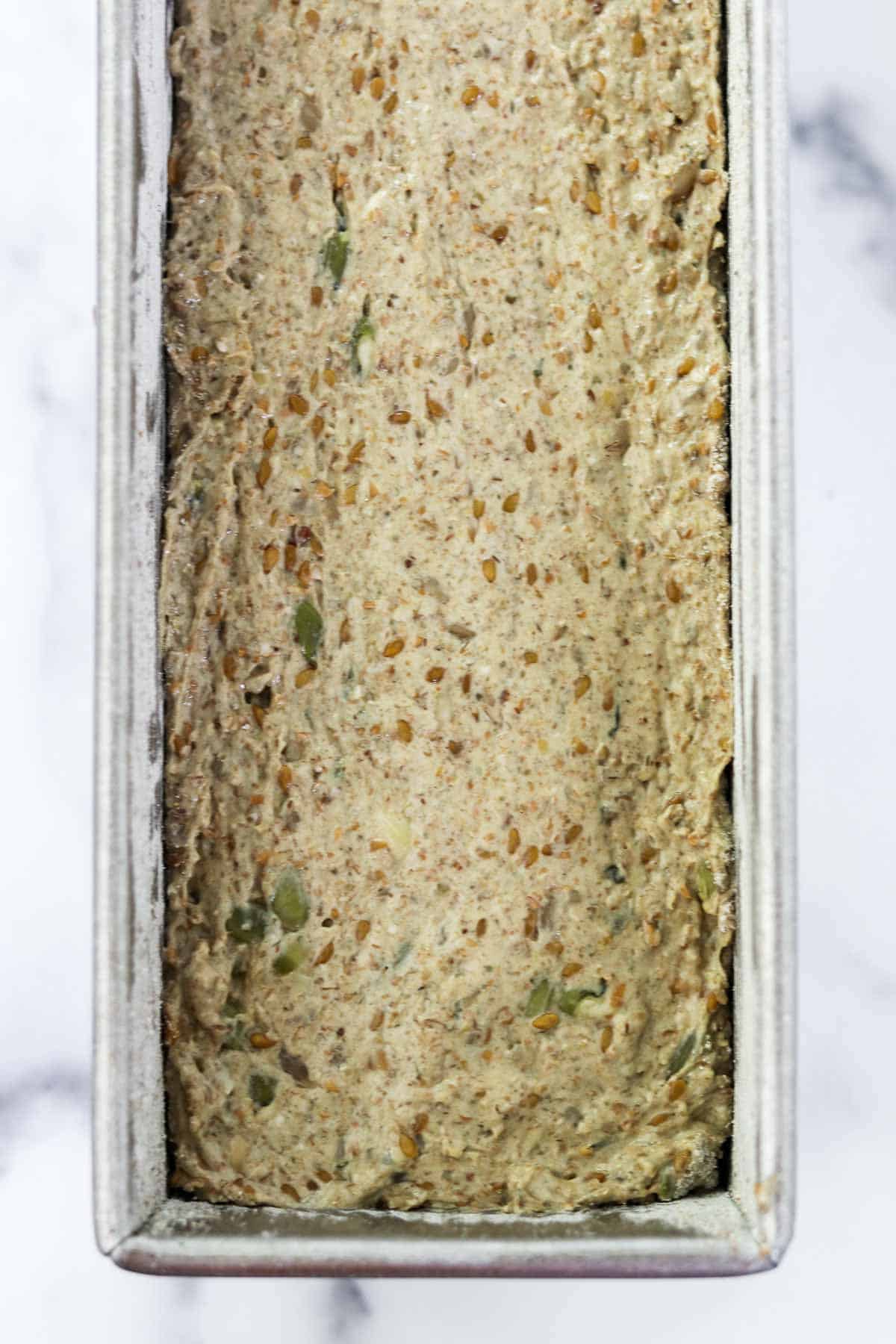
- Scrape or spoon the dough into the prepared pan and smooth out the top. Damp fingers or a moistened spatula can help with this if you are having a hard time getting the top smooth.
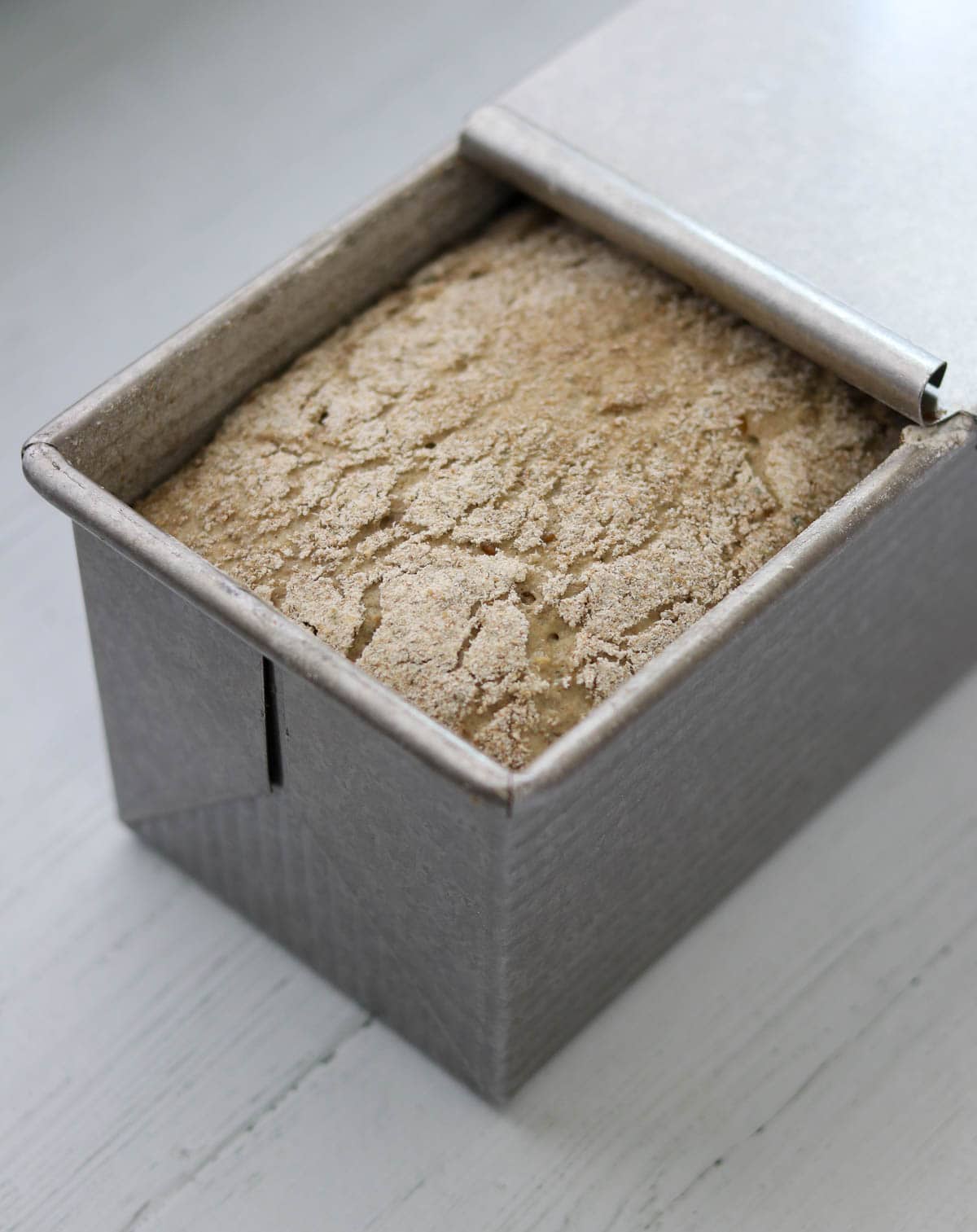
- Dust the top of the loaf with a thin, even layer of rye flour and place the pullman lid cover on top of the pan. Let the dough rise for 1½ -3 hours at room temperature or until it is about ½ inch from the top of the pan. The time that it takes for your dough to rise will largely depend on the temperature of the dough and your kitchen.
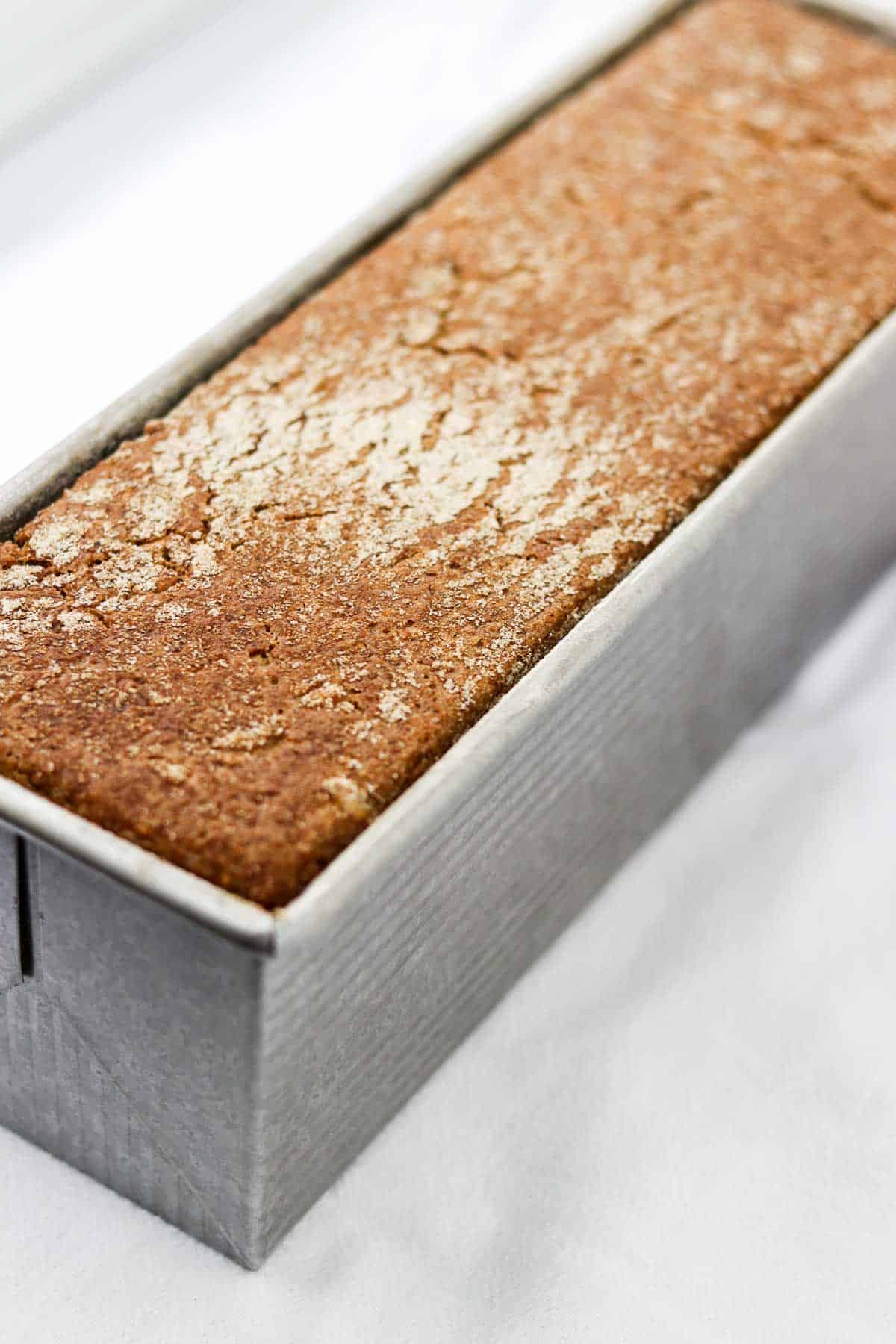
- Meanwhile, preheat the oven to 500 degrees. Bake the loaf with the lid on for 15 minutes. Reduce the temperature to 400 degrees and continue to bake, covered, for an additional 15 minutes. Remove the pan from oven and carefully slide the lid off. Reduce the temperature to 325 degrees and bake, uncovered, for an additional 45 minutes.
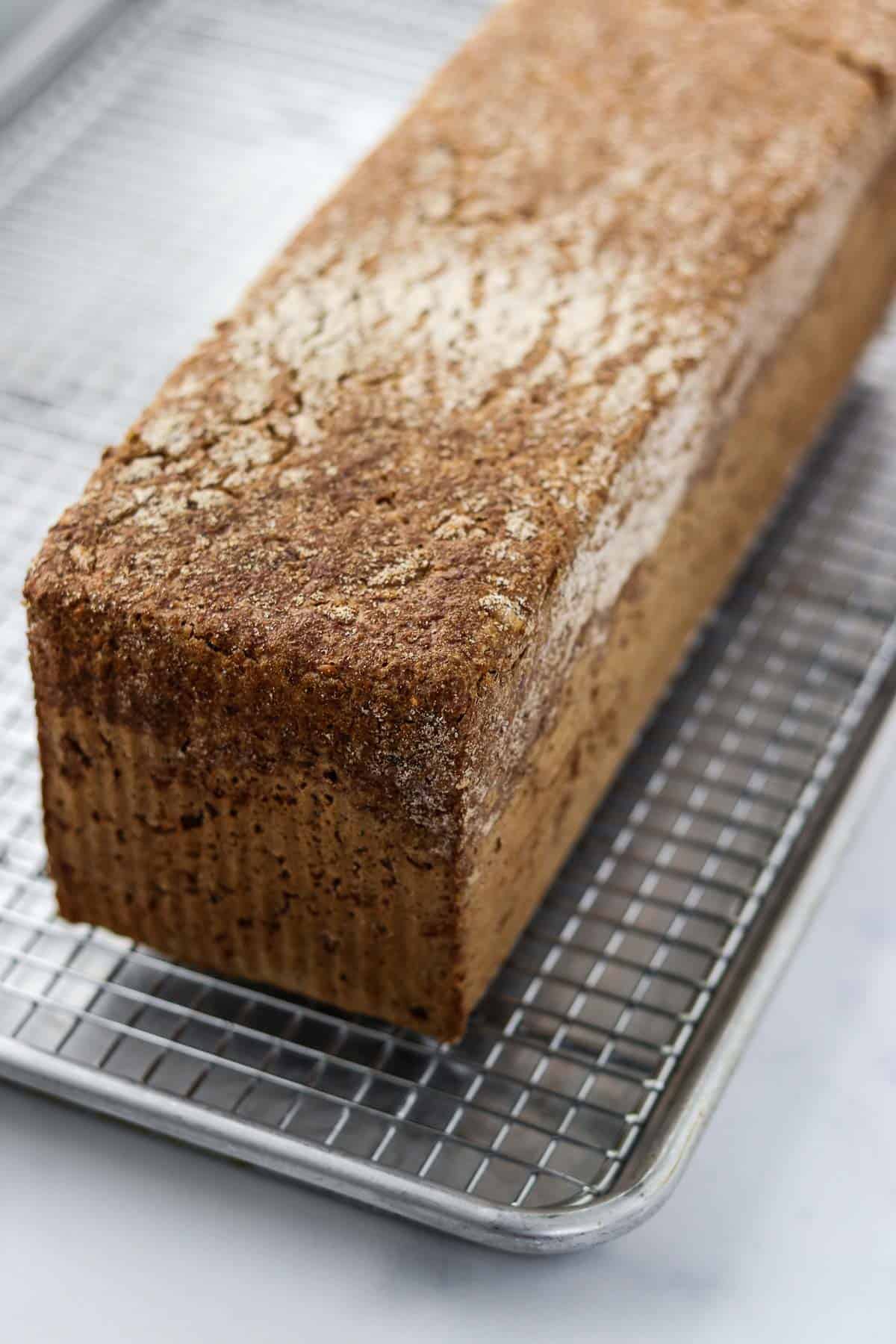
- Remove from the oven and immediately turn the loaf out onto a metal cooling rack set inside a rimmed baking sheet. Return the bread to the oven for an additional 10 minutes. Remove from the oven and allow the bread to cool completely before slicing, at least 3 hours or overnight if you can wait! Rye bread is even better a day after baking.
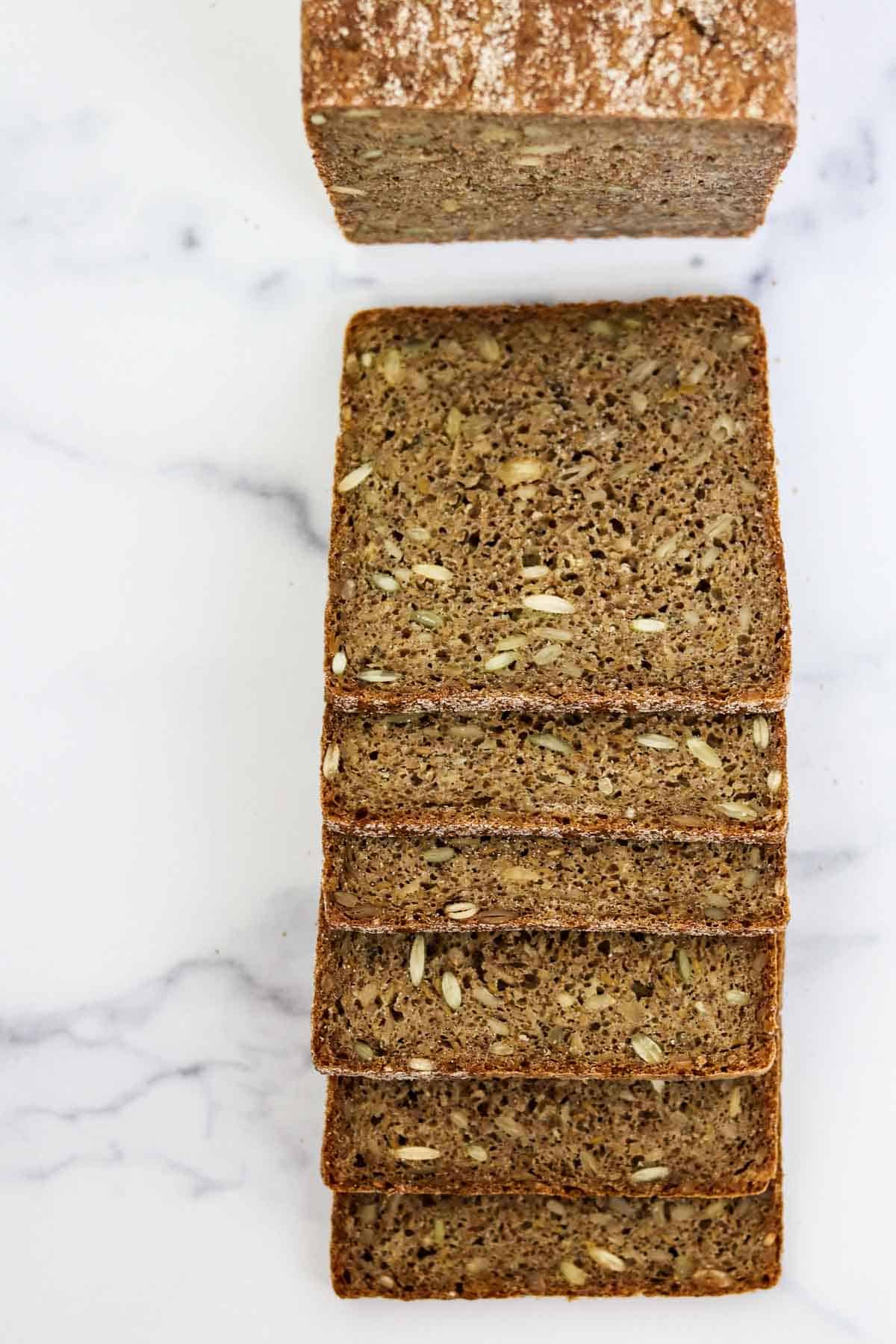
- Remove from the oven and allow the bread to cool completely before slicing, at least 3 hours or overnight if you can wait! Rye bread is even better a day after baking.
Expert Tip
- Wait a day before enjoying your bread! Unlike wheat breads which are best eaten shortly after cooling, both the texture and flavor of rye bread improves after a rest of 12-24 hours. Once the bread has cooled completely, wrap it loosely in foil and cut into it the following day.
Recipe FAQs
Rugbrød simply means "rye bread" in Danish. It is a sturdy, dense loaf that is comprised of rye flour, chopped rye grains and is often studded with sunflower, pumpkin and/or flax seeds. It is often baked in a 13 x 4 inch pullman pan with a lid. This helps the rye bread bake properly and gives it its characteristic square shape.
It can be stored loosely wrapped in foil at room temperature for about 5 days.
Yes! Rugbrød freezes very well. Tightly wrap the bread (either a whole or partial loaf or slices) in plastic wrap and then either tightly wrap it in foil or place it inside of a freezer bag. It will keep for a couple of months.
I have had many readers tell me they have split the dough into two 9 x 5 loaf pans instead of using the pullman pan with excellent results. Use a heavy baking sheet as a "lid" for the covered portion of the baking and keep the baking times and temperatures the same.
If you have a smaller mixer, it may be difficult to get all of the dough in the bowl at one time. If that is the case, simply mix half of the overnight dough, molasses, salt and the soaker and then mix the second half. Combine all of the dough together in the loaf pan for baking.
Rye breads, particularly those baked here in America, often have a variety of ingredients added to them to enhance their color (making them darker in appearance) and flavor. Common additions include caramel coloring (no thank you), stout beer, cocoa powder, espresso powder and molasses. Rugbrød, in contrast, has very little additional flavoring, perhaps just a little molasses for sweetening. It is meant to be a very straightforward bread so that it can serve as a neutral base for a variety of different sandwich toppings.
Sometimes I will come across a rugbrød recipe that calls for flavor enhancers such as caraway, fennel or anise seed in the dough, but this seems to be more of an exception than the rule.
How and What to serve with Rugbrød
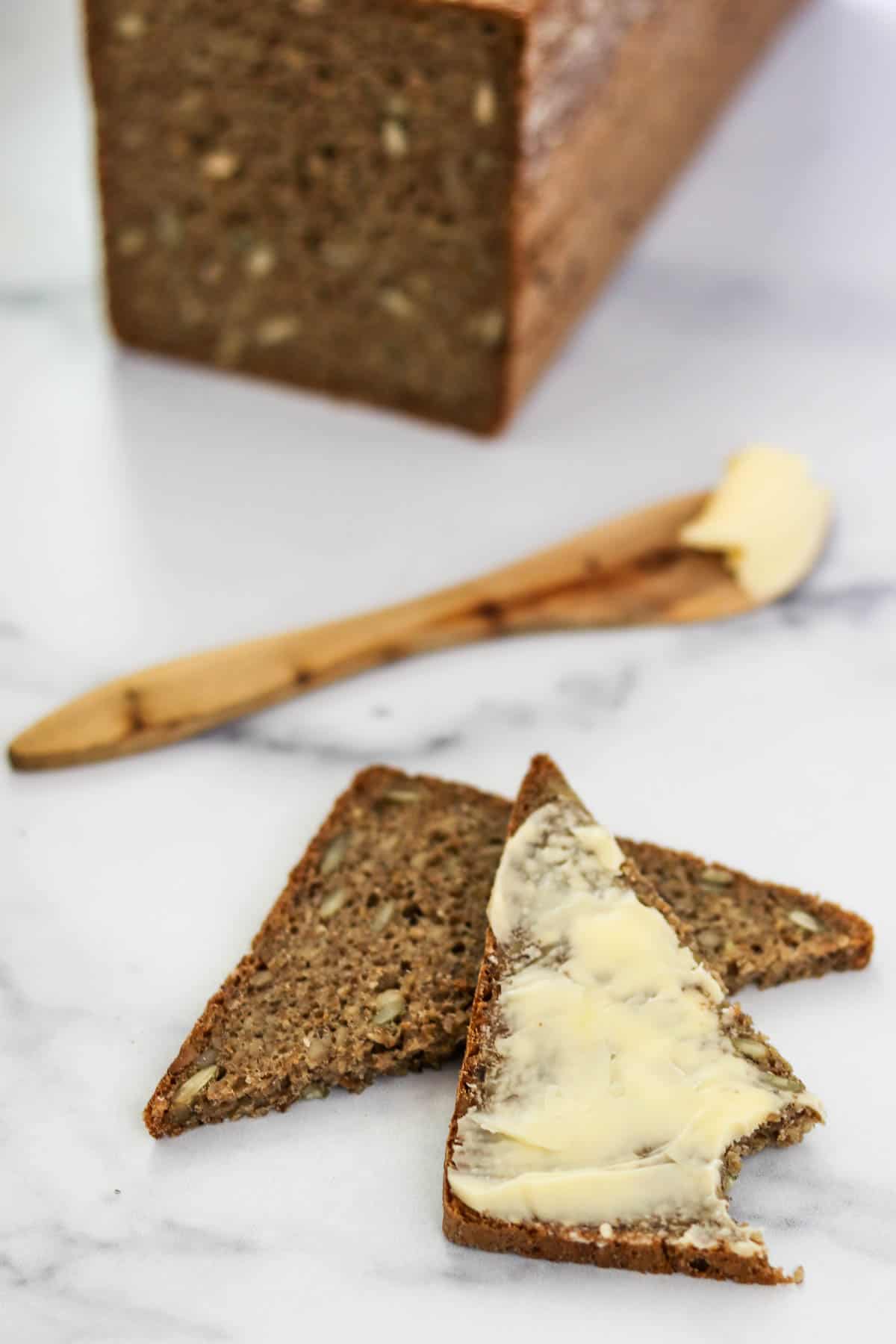
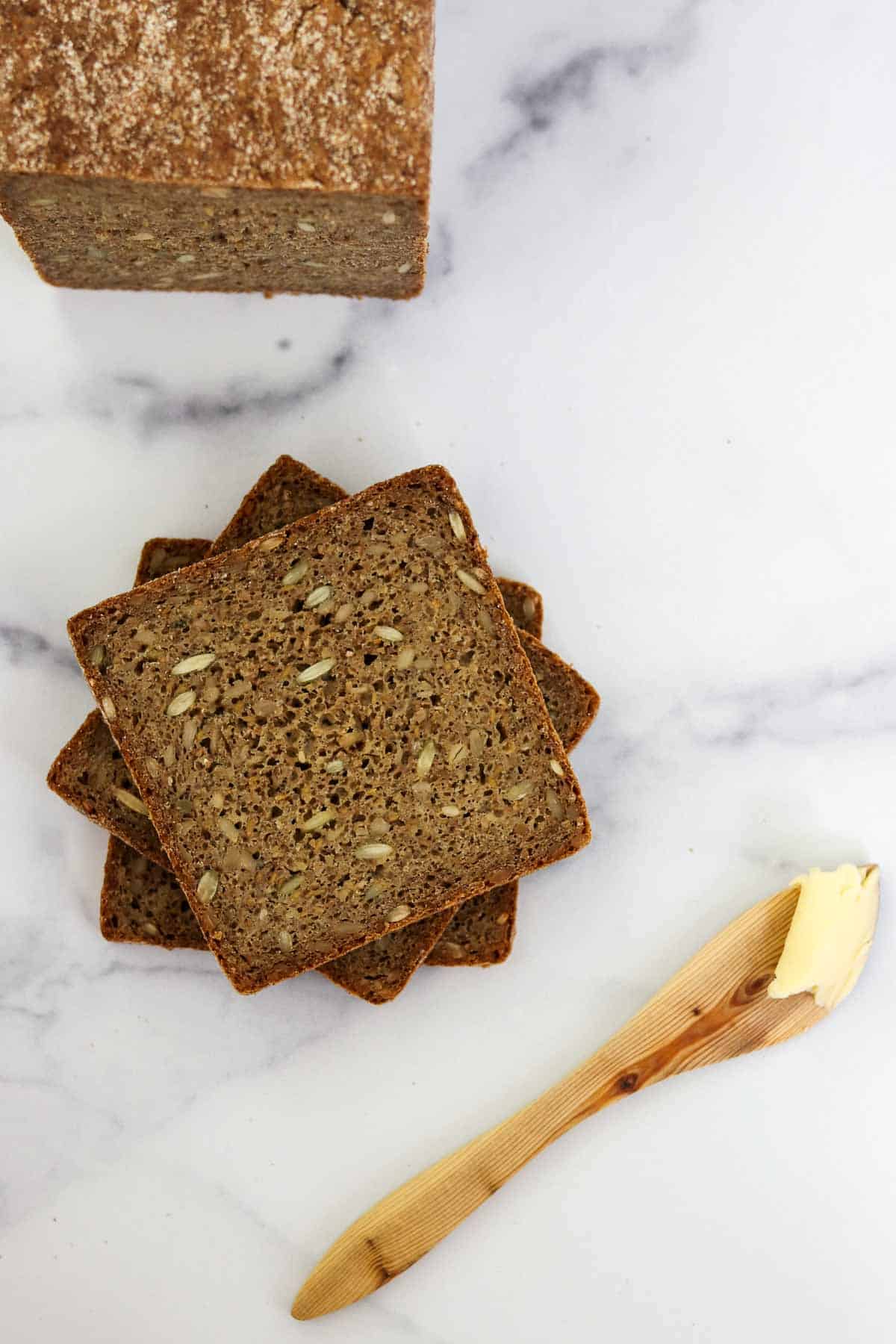
When it is served, Rugbrød is typically sliced thin (a little less than a quarter of an inch) and buttered liberally with salted butter. There is actually a word in Danish, tandsmør, which means "tooth butter". It refers to buttering your bread generously enough so that when you bite into it you can see your teeth marks in it.
It may be enjoyed as is, simply slathered with butter, or it can be piled with additional ingredients to form the base of smørrebrød , the famous Danish open-faced sandwiches. Check out this post about How to Make Smørrebrød at Home for everything you need to know about making these deliciously beautiful open-faced sandwiches with your rugbrød!
Related Recipes
Looking for more Scandinavian rye bread recipes? Give these a try:

If you tried this Danish Rye Bread (Rugbrød) recipe or any other recipe on my website, please leave a 🌟 star rating and let me know how it goes in the comments below. I love hearing from you!
Recipe
Easy Overnight Danish Rye Bread (Rugbrød)
Ingredients
For the Soaker:
- 2 ½ cups 7 grain hot cereal mix such as Bob's Red Mill brand or rye chops see note below
- 1 cup raw sunflower seeds
- 1 cup raw pumpkin seeds (pepitas)
- ½ cup flax seeds
- 2 ⅔ cups cold water
For the Dough:
- 2 cups dark rye flour I use the Bob's Red Mill brand, plus more for dusting the pan and loaf
- 2 cups bread flour
- 1 teaspoon instant dried yeast
- 1 ½ cups cold water
- 4 teaspoons salt
- ¼ cup molasses
- Butter for greasing the pan
Special Equipment Needed:
- Stand mixer
- Pullman pan with lid (13 x 4 inches in size)
Instructions
- For the Soaker: Combine all the ingredients for the soaker in a medium bowl. Cover with plastic wrap and let sit at room temperature overnight, approximately 8-12 hours.
- For the Dough: Combine both flours, yeast and water in a separate bowl. Stir to combine as best you can (mixture will be thick), and then knead briefly with your hands until you have a cohesive mixture. Dough will be very thick and clay-like in texture. Cover with plastic wrap and let sit at room temperature overnight, about 8-12 hours.
- Grease a 13 x 4 inch pullman pan with lid with butter and dust with rye flour, including the lid. Set aside. Combine the soaker, flour mixture, salt and molasses in the bowl of a stand mixer. Fit mixer with paddle attachment and mix on low speed for 2-3 minutes until everything is thoroughly combined, scraping down the sides of the bowl from time to time. Increase speed to medium and mix for an additional 2-3 minutes, stopping to occasionally scrape down the sides of the bowl. Mixture will be quite sticky.
- Transfer the dough to the prepared pan. Smooth out the top and sift a thin layer of rye flour over the surface of the dough. Place lid on pan and let the dough rise for 1½ -3 hours at room temperature or until it is about ½ inch from the top of the pan. The time that it takes for your dough to rise will largely depend on the temperature of the dough and your kitchen.
- Meanwhile, preheat the oven to 500 degrees. Bake the loaf with the lid on for 15 minutes. Reduce the temperature to 400 degrees and continue to bake, covered, for an additional 15 minutes. Remove the pan from oven and carefully slide the lid off. Reduce the temperature to 325 degrees and bake, uncovered, for an additional 45 minutes. (The loaf should have an internal temperature of 205-210 degrees F on an instant read thermometer at this point). Remove from the oven and immediately turn the loaf out onto a metal cooling rack set inside a rimmed baking sheet. Return the bread to the oven for an additional 10 minutes. Remove from the oven and allow the bread to cool completely before slicing, at least 3 hours. Rye bread is even better a day after baking. If you can wait until the following day, let the completely cooled bread sit at room temperature loosely wrapped in foil overnight before slicing. The bread will keep at room temperature for 3-5 days loosely wrapped in foil. Freeze for longer storage.

I absolutely love this bread. People I've served it to can't say enough good things about it. Everyone wants the recipe! Thanks for making this so easy that even this novice baker can be successful.
Hi KJ,
SO glad you enjoyed it! Thanks so much for your feedback!
Kristi
This bread is "to die for" delicious. The taste, heft and chewiness was perfectly on-point. If I closed my eyes while eating it, I was transported to Europe.
Thanks, KJ! So glad you enjoyed it!
I’ve made a few different rugbrod loaves but this is my favorite. Moist, not gummy, filling, great plain or with toppings. I shared with friends and they all want the recipe. I don’t have a Pullman pan and used two 9x5 pans resulting in a rectangular slice of bread vs the square slice. I should have known better, since calculating the volume of each pan in square inches suggests the smaller loaf pans have the closest total volume compared to the Pullman pan.
Pullman pan: 13 x 4=52 sq inches.
8x4.5=36 which is 72 sq inches for 2 loaves.
9x5=45, 90 sq inches for 2 loaves
Thanks for your feedback, Monica! So glad you are enjoying the bread.
Kristi
I need to make the soak and dough the night before and cannot complete the mix until later the next afternoon. Can the soak and dough sit for closer to 18-24 hrs with no problem? Thanks so much. I am making this for St Patricks Day in just a few days!
Becky
Hi Becky,
Thanks for your question! I'm inclined to have you pop them both in the fridge in the morning and then take them out about an hour before you do the final mix. This will slow down the yeast production until you are able to return to it. Let me know how that goes!
Kristi
Thank you for your suggestions! I will put the soak and dough in fridge on Thursday morning before work and will see what happens! I know it will take longer to rise in the pan due to the colder temp.
I made this yesterday and it was awesome for breakfast today!
I scaled the recipe to fit my 8” pullman pan (reportedly a 1 pound pan) by multiplying the ingredients by 0.45. Next time I made go up to 0.5 or 0.55.
I didn’t have flax seeds so I substituted flax meal. That soaked up a lot of water so I gradually added more water to the soaker until I had something moist. I ended up adding 130g water to the soaker and the resulting bread was delicious.
I’ll be making this again!
Hi Dave,
So glad you enjoyed it! Thanks for your feedback!
Kristi
Hi Anissa,
I hope the bread baking is going well! I have never used salted seeds but would probably reduce the salt by half to start with. Hope this helps!
Kristi
I’m in the process of making the bread now. So excited to finally find rye chops after 3 years of searching. Wish I would’ve found your blog sooner to know that I could’ve substituted the 7 grain! I’ve had the biggest hankering for rugbrød since moving back to the states from Denmark and without a surdej ready I’m happy to have found your recipe for an overnight bread. I did have difficulty finding sunflower seeds and pumpkin seeds that were unsalted and not roasted so I went ahead and bought them hoping they’ll work in a pinch until I can order some online. That being said, since they’re salted do you think I should omit the salt in the recipe, or perhaps cut back on it at the very least? Just wanted to make sure cutting it out wouldnt have any adverse effects on the baking process.
Hi Kristi
I have 2 questions..... can I use cracked rye berries instead of rye chops? Also about yeast.... I'm having a problem with the weight ( I prefer to weigh over measure). When weghing yeast 1 tsp doesn't weigh 4 grams. I've come across this with some other recipes as well. so do I use the 3 gm or measure the tsp? In order to get 3 gm it is MUCH more than 1 tsp
Thank for this recipe, I will be making it the very moment I receive your reply and I am so anxious. I grew up eating this bread and I can wait!
Hi Karen,
Cracked rye berries should work! As long as they aren't whole rye berries and you are doing the overnight soak I think you'll be fine. Definitely just a teaspoon of yeast! I should probably remove the grams on that measurement in the recipe because sometimes those small amounts are difficult to get accurate. Please report back and let me know how it turns out!
Kristi
Hi
We made this last night (did an 8 hour soak with rye chops that we can get locally throughout the day). Other than a little bit of over proofing (due to doing something else) everything seemed to be fine but when we removed the lid it stuck and about 1/4 of the top ripped off. I got a smaller pullmans pan and when looking at the label on it we noticed that it says that over 450 the nonstick coating doesnt work (yes I also dusted the top with flour as well. So does it have to be bake at the 500 for 15 min or is there something in the 450 range we can try?
Otherwise we will be trying this again
Hi Sarah,
Sorry to hear that ! You could definitely try 450 for the first fifteen minutes rather than starting at 500 (maybe add an additional 5 minutes of baking time for good measure). And I would double down on the layer of rye flour that is sifted on top of the loaf before baking along with thoroughly greasing and flouring the lid. Hopefully that does the trick! Please let me know if it works out for you.
Thanks,
Kristi
Thank you for adding gram measurements!
I have now prepared this recipe four times, and my 'consumers' and I all love, LOVE the bread,,, It is beyond delicious! I am a traditional sourdough baker, but I feel NO NEED to sway from the instant yeast in this recipe.
THANK YOU!!!
Hi Donn,
So glad you are enjoying the bread! I had a lot of requests for grams so I am happy to have made that happen. I am also a sourdough baker but find myself coming back to this one just because I love it! I do have a sourdough version of rugbrød here on the blog should ever want to give it a try. Also delicious!
Happy weekend to you!
Kristi
I would also like to have a version of this recipe that uses weights in grams. Although I can find a conversion online, I don't know whether it would work for this recipe - or whether my "cups" would weigh the same as your "cups," which is why weights are more reliable in recipes.
THANK YOU!
Hi Donna,
Yes! I've had several requests for gram measurements and plan to add them soon, hopefully within the week. I had hoped to get it done over the holidays but it didn't happen. Thanks for your interest!
Kristi
Kristi - I would like to point out that when I went to print the recipe, there base recipe is for 26 slices but if you change the number of slices the only the volume measurements are changes - the gram weight stays the same.
Wasn’t a problem for me but it might foul someone else up.
Thanks, Dave! I will get that fixed.
Kristi
Hello! I am eager to try this recipe!
Do you have a version of this recipe that converts volume to weight? (In grams.) I am used to cooking in more exact measurements.
Thank you so much!
Hi. This recipe looks well worth trying. Question: Can you blend whole rye berries o make rye chops?
Hi Ray,
That's a good question! I had someone try using a food processor with limited success but I wonder it a high-powered blender might work? I think it would be worth trying! Please let me know if you give it a go.
Kristi
I’ve used a coffee grinder to mill rye berries to chops. My grinder is adjustable. For rye flour, the chops get processed a second time. Works great.
Hi Kristi,
I would like to try your recipe but I leave in Europe. I'm not used to the cups measurement. I only use a scale when I bake breads. I tried to convert on google but doesn't seems accurate
.. It gives different result when I convert to grams.
please could you help ?
Should I use your sourdough recipe that is in grams and add the extra flour and water from the levain+ instant yeast ?? I don't want to use a sourdough starter.
Thanks a lot for your help
Best
Sara
Hi Sara,
I can try and do the gram measurements for you! I've been meaning to add them but just haven't gotten around to it. I will try and get to it by the end of the week so please check back in!
Kristi
Thank you very much. looking forward
Hi Anna Belle,
So glad you are enjoying the bread! Thanks for sharing your feedback!
Kristi