
Sourdough Danish Rye Bread (Rugbrød)
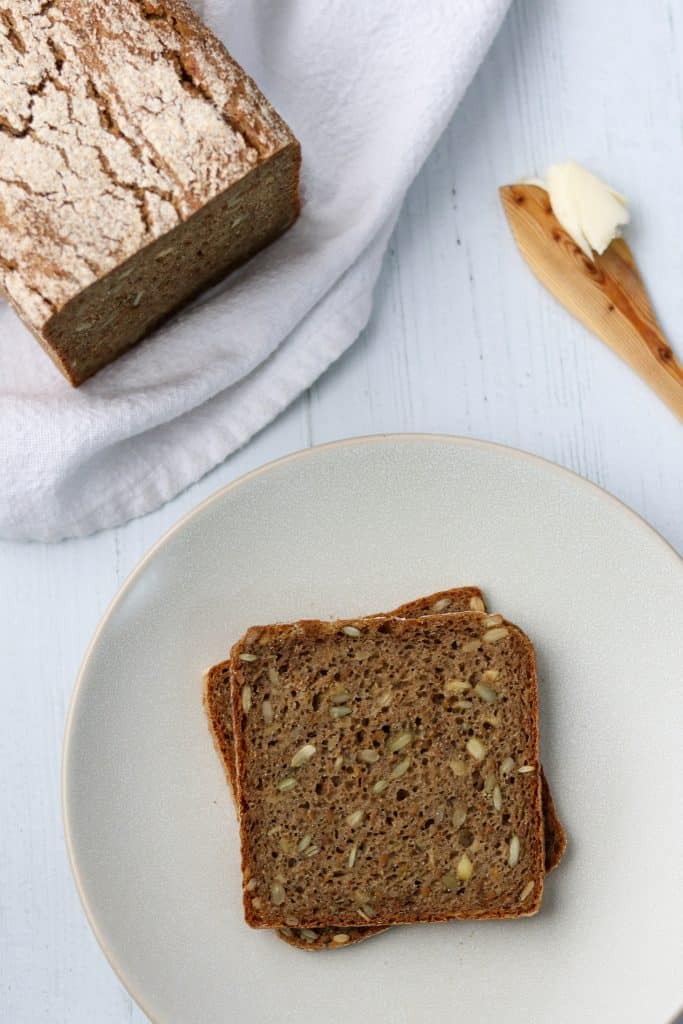
So...do you have a sourdough starter bubbling away on your countertop yet? Many of you must because I've had several recent requests for a sourdough version of rugbrød, the dense Danish rye bread that is often used as the base for smørrebrød. So I figured it was probably time to get this recipe up on the blog!
I've been making this sourdough rugbrød for several years now, long before I created this easy overnight version that I posted on the blog last fall. At the time, I figured that a lot of people don't keep sourdough starters at home, and they might appreciate a version that relies on commercial yeast for leavening. But, there is something to be said for making the real thing with your very own sourdough starter. Not only is it satisfying to use wild yeast for leavening, it also creates a delicious bread with a subtle tang that you will only get through the sourdough process. Sourdough bread also lasts longer than bread leavened with commercial yeast thanks to its acidic nature. So let's get started with the basics, shall we?
WHAT IS RUGBRØD?
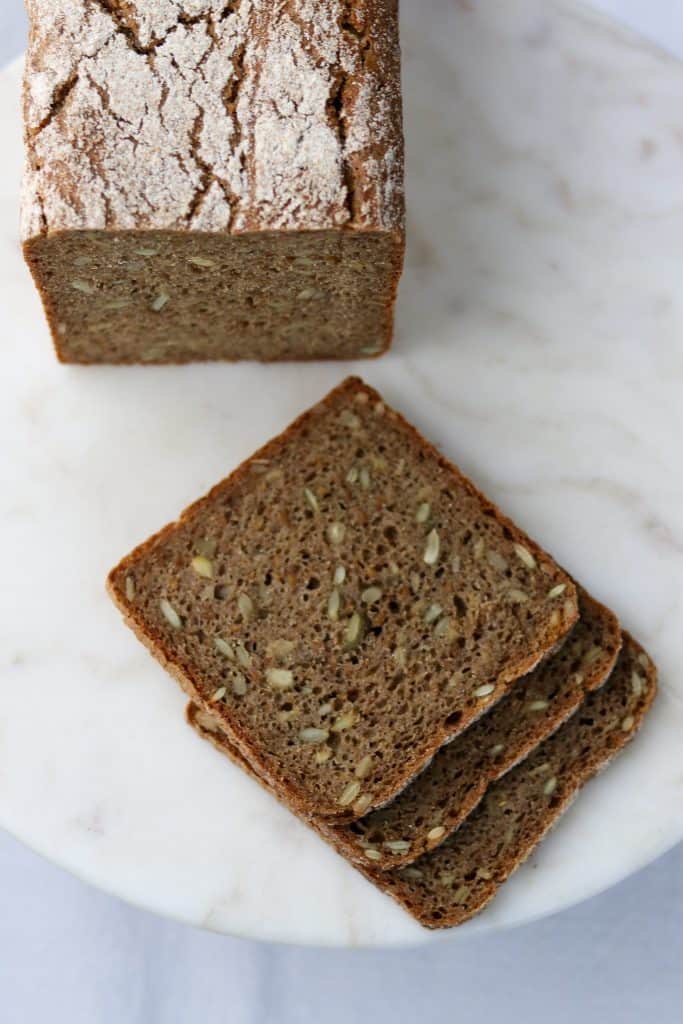
Rugbrød simply means "rye bread" in Danish. It is a sturdy, dense loaf that is comprised of rye flour, chopped rye grains and is often studded with sunflower, pumpkin and/or flax seeds. It is almost always baked in a 13 x 4 inch pullman pan with a lid. This helps the rye bread bake properly and gives it its characteristic square shape.
Rye breads, particularly those baked here in America, often have a variety of ingredients added to them to enhance their color (making them darker in appearance) and flavor. Common additions include caramel coloring (no thank you), stout beer, cocoa powder, espresso powder and molasses. Rugbrød, in contrast, has very little additional flavoring, perhaps just a little molasses for sweetening. It is meant to be a very straightforward bread so that it can serve as a neutral base for a variety of different sandwich toppings. Sometimes I will come across a rugbrød recipe that calls for flavor enhancers such as caraway, fennel or anise seed in the dough, but this seems to be more of an exception than the rule. Again, simple is the name of the game here.
When it is served, Rugbrød is typically sliced thin (a little less than a quarter of an inch) and buttered liberally with salted butter. There is actually a word in Danish, tandsmør, which means "tooth butter". It refers to buttering your bread generously enough so that when you bite into it you can see your teeth marks in it. You butter lovers know what I'm talking about. It may be enjoyed as is, simply slathered with butter, or it can be piled with additional ingredients to form the base of smørrebrød, the famous Danish open sandwich.

WHAT MAKES RYE SO SPECIAL?
Rye has many unique qualities that make it quite different from wheat, both as a whole grain and in flour form:
- Rye has historically been important for the Nordic region as it is a hearty plant that can tolerate poor soil and weathers cold and wet conditions better than most grains. It was the primary grain relied upon for bread-baking in the north for centuries and is still popular today.
- Rye flour has less gluten than wheat flour. Gluten strands form the structure of bread and trap gases produced by the yeast so that your bread leavens properly. Because gluten doesn't form well when rye flour is mixed with water, rye breads are always more dense in structure and have a closer crumb that wheat breads.
- Rye flour holds more water than wheat flour and contains certain enzymes that convert starch to sugar. This can cause rye breads to be overly moist and have a gummy texture if not handled and baked properly.
- Your sourdough starter will help your loaf of rye bread succeed. While rye's unique qualities can make it challenging to use in a bread recipe, your sourdough starter can help counteract some of those challenges. Using a sourdough starter contributes certain acids to the dough which help neutralize some of the negative effects of the enzymes that can cause the bread to have a gummy texture.
- Rye breads get better with a little age. Unlike wheat breads which are best eaten shortly after cooling, both the texture and flavor of rye bread improves after a rest of 24-36 hours.
- An interesting fact: There is a fungus called ergot that can attack rye plants causing the grains to become highly toxic to humans and trigger hallucinations if ingested. Some historians believe that ergot-infested rye was the cause of the hallucinations that led to the Salem witch trials in Massachusetts in 1692. Fortunately, modern industrialization has all but eliminated any risk of ergot-infected rye as any diseased grains are removed prior to processing.
The Sourdough Process
Making sourdough rugbrød is really quite simple. Here is a quick overview of the process from start to finish:
Weighing Your Ingredients in Grams
The first thing you might notice about the recipe is that it is written in grams. Don't let that intimidate you. Most sourdough recipes are written by weight in grams and it is actually a really easy and accurate way to bake. Simply zero out your kitchen scale with the bowl you plan to use sitting on top. Set the scale to grams and start weighing! Seriously....easier than cups and spoons. Just remember to zero out your scale every time you add a new ingredient.
The Day Before You Bake: Refresh Your Starter
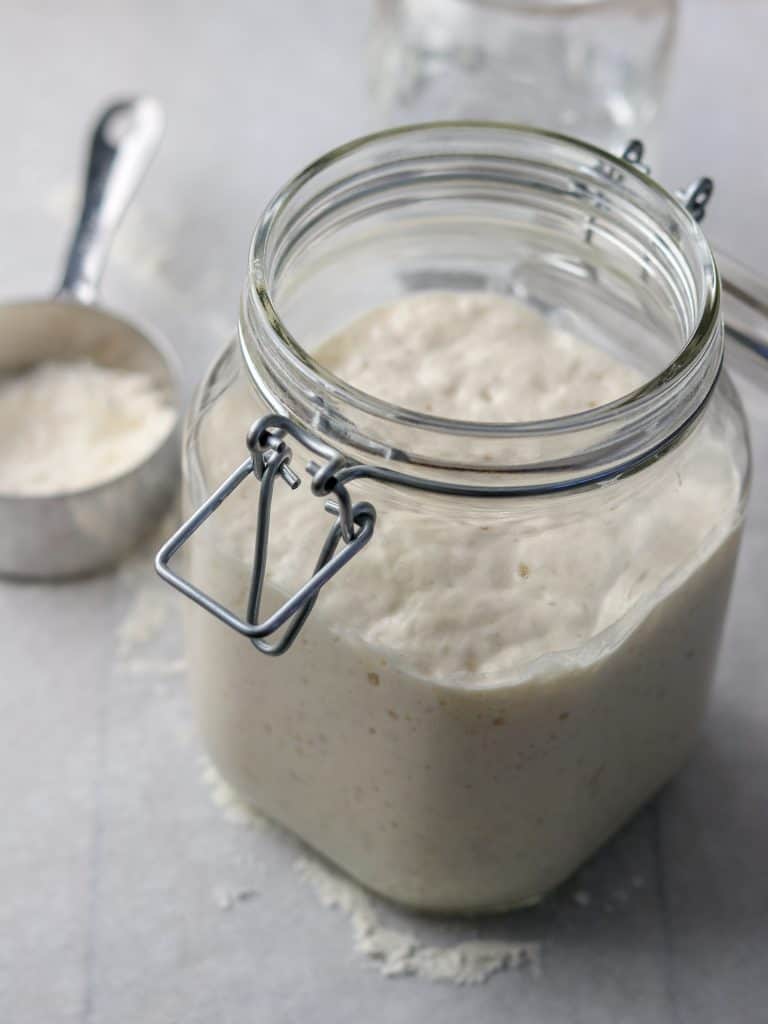
It's best to a use refreshed and ripe sourdough starter when you begin to build your dough. What does "refreshed and ripe" mean? Simply that you fed your starter about 8 hour prior to when you plan to use it. It should be bubbly, active and puffy throughout.
The Night Before You Bake: Create a Levain
This recipe calls for a levain, which is a term for a portion of the dough that will ferment overnight before we mix the final dough. A levain consists of water, flour and a bit of ripe sourdough starter.
The Night Before You Bake: Create a Soaker
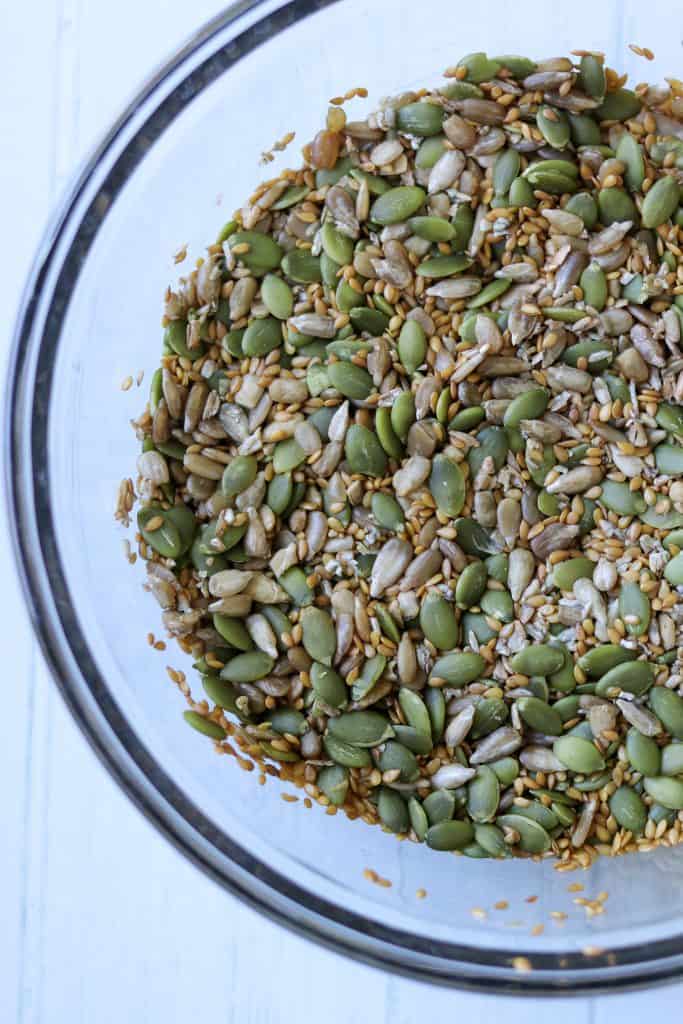
This recipe also calls for a soaker. This is a mixture of rye chops (or Bob's Red Mill 7 Grain Hot Cereal Mix) and seeds that will sit overnight in water prior to adding it to the final dough. Soaking these ingredients overnight in water helps soften them so that they will have a pleasant texture in the final loaf. And there is no need to drain the soaker prior to adding it to the final dough.
The Next Morning: Build Your Final Dough
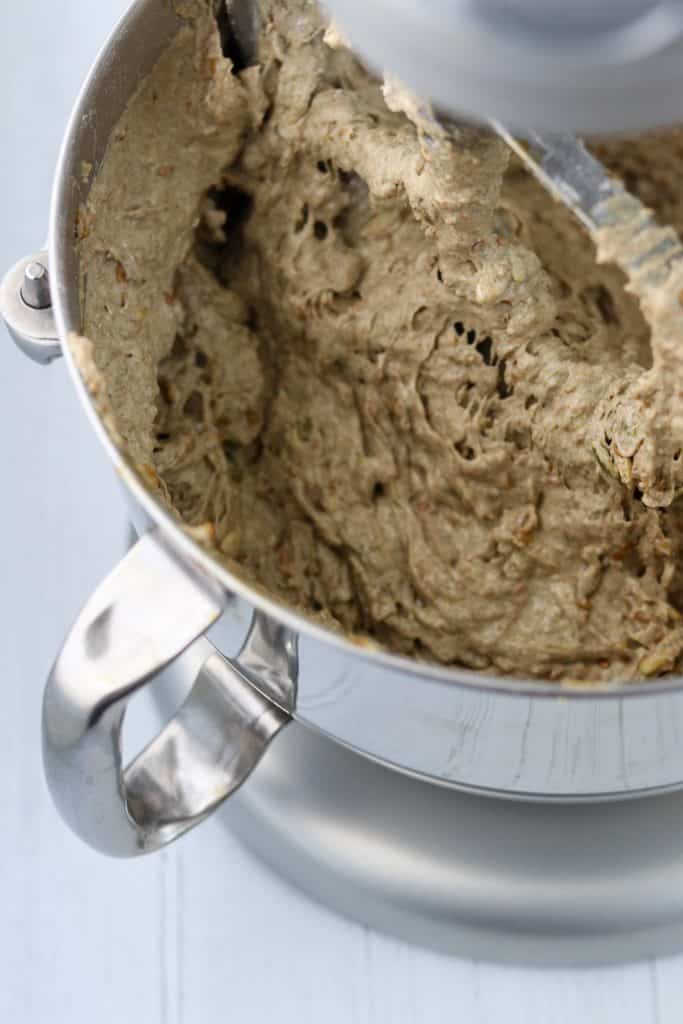
Your levain and soaker have been sitting overnight and it's time to put the final dough together. This couldn't be easier. Simply add all the ingredients for the dough to the bowl of a heavy duty stand mixer. Mix on low for a few minutes and then increase the speed to medium for a few minutes, scraping down the sides of the bowl occasionally. That's it! There is no kneading of this dough by hand as it is far too sticky to do so.
The Rise
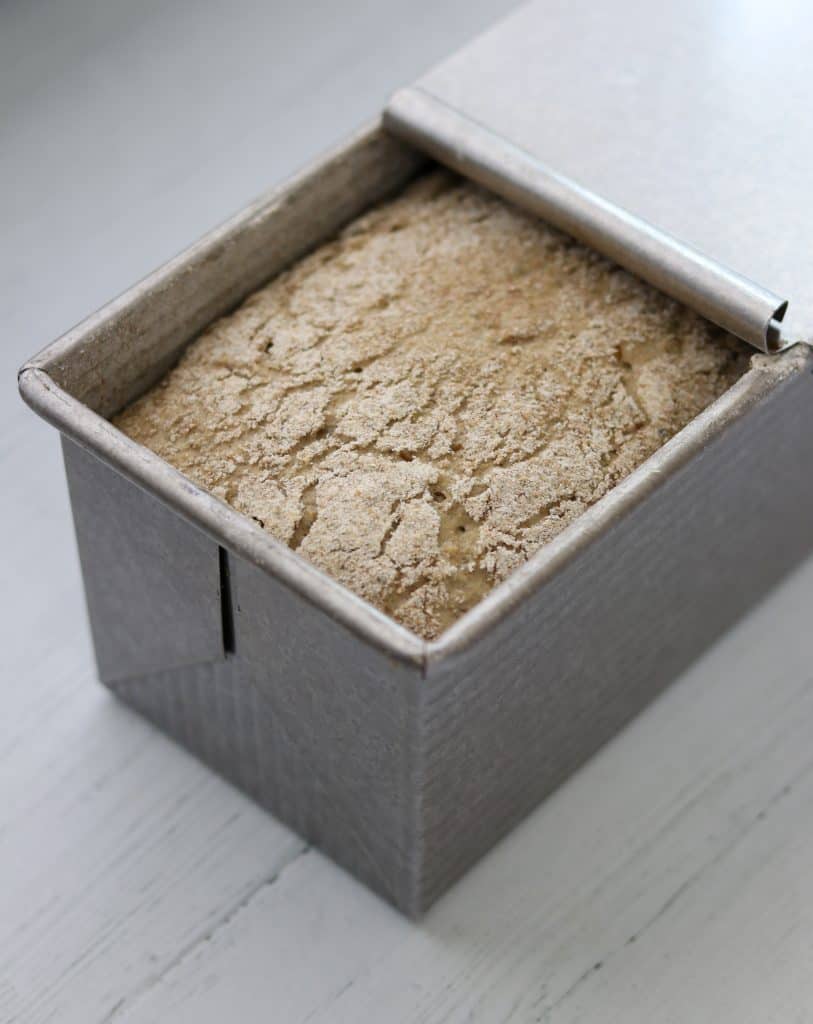
From here we scrape the dough into a greased and floured 13 x 4 pullman loaf pan with a lid. And then we wait. We let the dough rise and do its thing while we attend to whatever it is that we need to do. The dough should come within ½ inch of the top of the pan before we pop it in the oven. This will take anywhere from 1 ½ hours to 4 hours depending on the temperature of the dough and the temperature of your kitchen. Be patient and move your dough to a warmer spot if you want to speed things up a little. I will often turn the oven on and then let the pan sit on top of the stove while the oven preheats.
The Bake
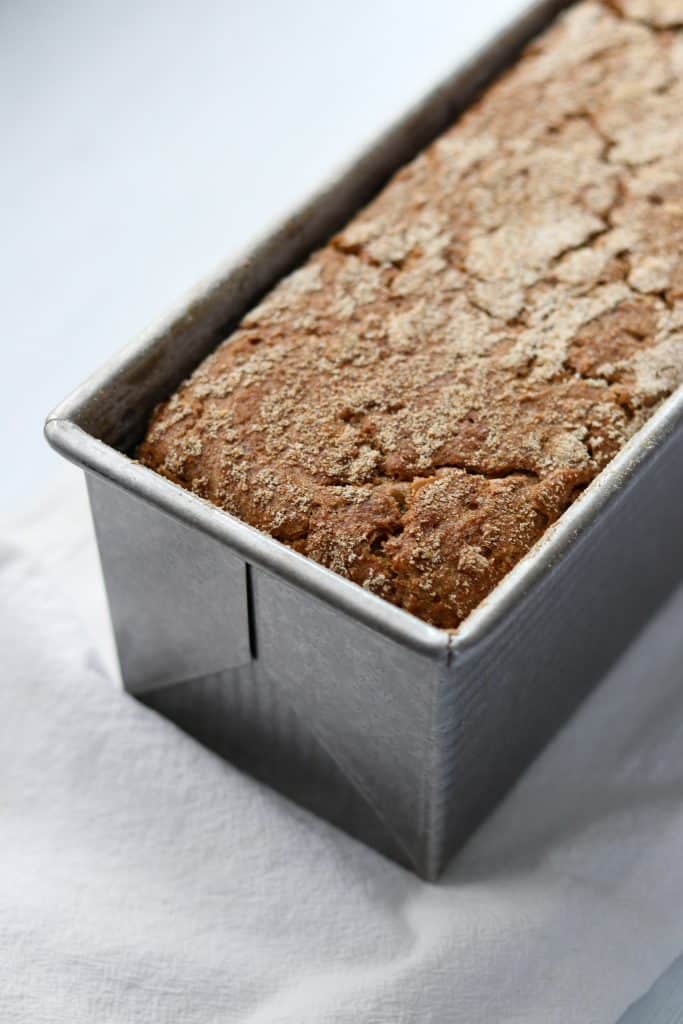
So what's up with the different baking temperatures in this recipe? They really do have a purpose, I promise. This method of baking helps prevent the enzymes that produce a gummy texture in rye breads from developing by keeping the loaf from spending too much time in the temperature zone where enzyme formation is the most favorable. The texture of your your bread will be moist and cooked evenly all the way through....just like you want it to be!
If you make your own smørrebrød at home or would like to, please give this sourdough rugbrød a try. It is one of the most delicious and nutritious breads out there and a great way to dip your toe into the world of sourdough. And using it as a base for a Nordic open sandwich will give you a true taste of authenticity. If you are new to smørrebrød, there are several open sandwich recipes on the blog to get you started:
- New Potato Smørrebrød with Garlic Aioli and Crispy Shallots
- Roasted Beet Hummus Smørrebrød with Avocado and Pickled Onions
- Roasted Broccoli Smørrebrød with Whipped Ricotta
- Roast Beef Smørrebrød with Remoulade and Crispy Shallots
- Italian Salad and Ham Smørrebrød
- Balsamic-Glazed Mushroom Smørrebrød with Garlicky White Bean Puree (vegan)
- Easy Garden Tomato Smørrebrød
- Chickpea Salad Smørrebrød
- Caramelized Leek and Snap Pea Salad Smørrebrød
- Smoked Salmon and Fennel Salad Smørrebrød
- Roasted Salmon Smørrebrød with Creamy Mustard Dill Sauce and Pickled Beets
- Beet and Celery Root Cake Smørrebrød with Herbed Skyr Sauce
- Roasted Butternut Squash Smørrebrød with Spicy Harissa Mayo and Pepitas
Recipe
Sourdough Danish Rye Bread (Rugbrød)
Ingredients
Special Equipment Needed:
- Kitchen scale
- Heavy duty stand mixer
- Pullman loaf pan with lid (13 x 4 inches in size)
Ingredients for the Night Before:
For the Levain:
- 300 grams dark rye flour
- 100 grams bread flour
- 350 grams water
- 70 grams ripe sourdough starter
For the Soaker:
- 75 grams rye chops or 7 grain hot cereal such as Bob's Red Mill
- 1 cup raw sunflower seeds (131 grams)
- 1 cup raw pumpkin seeds (142 grams)
- ½ cup flax seeds (65 grams)
- 285 grams water
Ingredients for the Day of Baking:
- All of the Levain
- All of the Soaker
- 200 grams dark rye flour
- 130 grams bread flour
- 180 grams water
- 18 grams salt
- 2 tablespoons molasses
Instructions
- The night before, make the Levain and the Soaker: Combine the ingredients for the Levain in a medium bowl. Stir with a spoon to combine (mixture will be thick and the texture of wet cement). Cover with plastic wrap and leave at room temperature overnight, approximately 12 hours. Combine the ingredients for the Soaker in a small bowl. Cover with plastic wrap and leave at room temperature overnight, approximately 12 hours.
- The next morning, grease a 13 x 4 inch pullman loaf pan (with a lid) and dust it with rye flour. Set aside.
- Combine the Levain and the Soaker (no need to drain) in the bowl of a heavy duty stand mixer. Add remaining dough ingredients. Using the paddle attachment, mix on low speed for 3-4 minutes, scraping down the sides of the bowl occasionally. Increase speed to medium and continue to mix and periodically scrape down the sides of the bowl for another 4 minutes.
- Using a sturdy spoon or spatula, transfer the dough to the prepared loaf pan, distributing it evenly across the length of the pan and smoothing out the top with a rubber spatula (if you are having trouble smoothing out the top, dampen the spatula slightly with water). Dust the surface of the loaf generously with rye flour. Put the cover on the loaf pan and let it rise until it comes to within a ½ inch of the top of the pan. This may take anywhere from 1 ½-4 hours depending on the temperature of your kitchen and the dough.
- Meanwhile, preheat the oven to 500 degrees. Place the covered loaf pan in the oven and bake for 15 minutes. Reduce the temperature of the oven to 400 degrees. Bake, covered, for an additional 15 minutes. Pull the loaf pan from the oven and remove the lid. Reduce the temperature of the oven to 325 degrees and continue to bake, uncovered, for an additional 45 minutes. Remove loaf from the oven and tip out onto a wire cooling rack. Let cool completely before slicing. Rye breads improve after a bit of resting time. If you can wait until the following day to slice into it, wrap the completely cooled loaf loosely in foil and let it cure until the next day. The bread will keep for about 4 or 5 days at room temperature wrapped loosely in plastic wrap and a layer of foil. For longer storage, wrap tightly and freeze.
Thanks I figured. I've made a Danish rye before no knead and the recipe was similar but with a longer ferment and it was a bit too sour for my liking.
Can this be made without a stand mixer? I've baked many sourdough breads using no knead methods and do not own a stand mixer.
Hi Walter,
Yes you can, it's just a really sticky dough so the mixer makes it easy. You can certainly use a spoon and some elbow grease to do the mixing instead! Hope this helps! It's a really great recipe. I hope you give it a try.
Kristi
Hello Kristi, thank you for this recipe. Can't wait to try. Do you think this recipe will work without a heavy-duty stand mixer and mixing by hand?
Hello,
Thanks for your question! I do think you can mix it by hand. It is super sticky and will require a bowl and wooden spoon (it's too sticky to knead by hand). And strong muscles, too!
Kristi
Thank you 🙂
This is a great recipe! I had never baked a rye bread before so it was a bit of an adventure for me.
It turns out the rye flour at my local store is light rye I guess, but the bread turned out perfectly even after incorrectly scaling the recipe back for a 4 x 10 tin and having to subsequently bake it without a lid.
I used pumpkin seeds, wheat grains and hemp seeds in my soak. I don't have a tin with a lid so my intention was to place another tin on top to act as a lid, however after barely an hour proofing, the dough had reached the top of the pan and I had to abandon that plan. I baked it using combi-steam to make up for the lack of lid, and let it sit wrapped in foil overnight.
My husband and I have just had a slice with salted butter for breakfast and it is delicious.
Thank you so much for the recipe!
Hi Jodie,
Thanks for your comment! I'm so glad you enjoyed the bread. It's a great one for getting starting with rye recipes!
Kristi
I had a 9 x 4" Pullman pan, so I reduced by a third. This might help anyone else who has the smaller pan. Thanks for the recipe! Just great.
levain:
200 grams dark rye flour
67 grams bread flour
231 grams water
46 grams starter
soaker:
50 grams Bob's Mill 7 Grain Cereal (I used 10 Grain)
86 grams sunflower seeds
93 grams pumpkin seeds
43 grams flax seeds
188 grams water
The Rest:
132 grams dark rye
86 grams bread flour
118 grams water
12 grams salt
1.3 tablespoons molasses
Hi Mavky,
So glad you enjoyed the bread and thank you so much for that helpful feedback!
Kristi
Hej Kristi!!
Mange tak!! You have made this Dane's wife SOOOOO happy!! Finally a recipe that 1)works, 2)tastes as good as/if not better than the store, and 3)I can serve with pride because I can cut it!! You don't know how many loaves I have tossed. I am so glad I tried yours, thank you!! Even made it Gluten-free (instead of Bread flour, used a mix of 1 1/2c oat flour, 1 1/2c potato flour, 1/2c chick pea flour, 1/2c almond flour, 1tsp ground flax) and it still worked perfectly. Doing a little dance before I have another slice
Hi Rosemarie,
YAY! I'm so glad you enjoyed the bread AND were able to find a gluten-free alternative for the bread flour! I had the same experience with other rugbrød recipes....a lot of them ended up in the trash. Thank you for taking the time to leave me your feedback. It is much appreciated!
Happy Baking,
Kristi
Hi Kristi, Fantastic recipe, works perfectly as written. I noticed that some people are having a problem finding rye chops. I find that my “Ninja” blender breaks whole rye berries up pretty well where my food processor will not. Not perfectly consistent, but just a few seconds seems to do the trick. Love your site. Cheers!
James
Hi James,
Thanks for your feedback! I get that question a lot so I will pass it along. SO glad you enjoyed the bread. It's one of my favorites.
Happy Baking!
Kristi
Made this yesterday and managed not to try it until today. Really good. Very similar to ones that cost arm and a leg in shops. Used my sourdough. Also good toasted
Hello,
Thank you for your comment! I'm so glad you enjoyed the bread and I agree....It's much more economical to make it at home!
Happy Baking,
Kristi
Hi Kristi,
Many thanks for the helpful advice. I made the bread with all-purpose flour, and it turned out great! I'm going to be adding this recipe to my regular lineup!
David
YAY! I'm so glad. Thanks for getting back to me!
Kristi
I'm eager to try this recipe and would like to know if all-purpose flour can be used in place of the bread flour. Will the lower protein content of all-purpose flour cause this recipe to fail? Many thanks for letting me know. I appreciate it and look forward to making this bread once I hear back from you.
Hi David,
I have never tried it with AP flour but I think it's worth a shot. It is a pretty forgiving recipe. Let me know how it turns out!
Kristi
Hi Bryan,
Thanks for your feedback! I'm glad you are enjoying the bread. As far as your question goes, it sounds like you've already played around with the temperature during the rise. Have you tried giving it a longer rise time? If you have already tried that, I would suggest maybe adding a little more sourdough starter and see where that gets you. Please let me know if that is helpful!
Kristi
Great bread! Thanks for the recipe! I’m having a problem, though. I’ve just baked my second loaf and neither of them has risen as much as they should have. The first time, I put the pan in the oven with the light on. It raised to about 1.25 inches from the top of the pan. The second time, I put the pan in a small room with a portable heater keeping the temperature up and got pretty much the same result, maybe a .25” difference. What other things could I try to get more height? Put it in a steamy environment? Add more starter? Any ideas? Thanks!
Is it possible to bake this in a tin with no lid. I don't have a lidded Pullman tin? I have made sourdough bread before but want to try a new recipe. Can you suggest other alternatives to rye chops or the 7 grain bob mills. I'm in Ireland and these are not easy to find. Would pinhead oatmeal (steel cut oats) work?
Hi Rachel,
Thanks for your question! Yes, you can bake this bread in two regular sized loaf pans and use a greased baking sheet as a "lid" for the portion of the bake time that it needs to be covered. I have never tried this recipe with steel cut oats but I seem to recall hearing from a reader who had and it worked out just fine. Hope this helps! Happy baking!
Kristi
Turned out delicious! I made a couple adjustments: I didn’t have a Pullman pan so I used a 9x5 bread pan lined with a tall rim of parchment to prevent spillover with the rise. That worked great. It has a rounded top but taste and crumb were great and didn’t over brown even through it was uncovered the entire bake time. I may have baked a bit longer; I baked to internal temp of 190. Also I used whole rye berries since that’s what I had. They were a bit chewier than I hoped for but not bad. Next time I will boil them briefly before adding the rest of the soaker ingredients. Very much a keeper!
Hi Rachel,
So glad you enjoyed the bread and that the adjustments worked out fine. Thanks so much for taking the time to leave me a review!
Kristi
Thank you for the recipe.
I made this two days ago and ate 2 slices for breakfast this morning. So good…
I didn’t have rye kernel in my pantry so I replaced with barley. I let the loaf proof overnight instead pf 4 hours.
Definitely will use the recipe again.
Tari
Hi Tari,
Thanks so much for your comment! So glad you enjoyed the bread and that barley worked as a substitute. Happy baking!
Kristi